
Art · Roman Thomas · Celle
What remains
becomes image.
I work with photography on the question of how reality comes into being in the act of seeing. My images show no places; they make states experienceable: the moment in which the familiar begins to withdraw and outer reality, memory and inner image overlap.
Photography, for me, is a means of slowing down seeing. In this slowing, perception changes. Between Hidden Places and Heimat I search for the same transition, the one in which the visible begins to shift.
Even where my images are no longer made photographically, the question remains the same: what remains when the image is no longer a likeness. AI is material and tool in this, alongside camera and movement, not a trick.
Art · 01 · Series
Series.
At the center stand Hidden Places and Heimat. Haut aus Stein and Cold Stone deepen the question in the material, Disruption and In the Shape of Feeling take it further with synthetic images. Street Life and Hidden Faces complete the body of work. Each series has its own page.


Art · 02 · Statement
Statement.
In my photographic work I investigate space not as a fixed place but as something that only takes shape in the act of perception. I am interested in the moment in which outer reality, memory and inner images overlap and an experience arises that cannot be clearly determined.
In the series Hidden Places I work with urban spaces that at first glance appear unambiguous. Architecture, light and structure point to real places, to something seemingly known. At the same time a distance arises that makes these places appear removed. The images move in a tension between recognizability and irritation. They show not only a place but a state in which reality and imagination pass into one another. This engagement with outer space was a first step for me. Over time my gaze has shifted increasingly inward. The question of what we see became the question of how we see. Bound up with this is a growing interest in what cannot be clearly grasped, in the blurred region between perception and sensation.
In my current series Heimat I deliberately let go of the stability of the visible. Through the movement of the camera during the exposure, structures begin to flow. This moment is central for me because it joins control and openness. I give up part of the control and allow the image to change in the process. Something arises that I cannot fully foresee. Landscape no longer appears in these works as a fixed place but as an open space in which forms dissolve, condense and connect anew. What emerges is a pictorial space that can no longer be clearly traced back to an outer reality. Perception, memory and sensation are inseparably interwoven.
The notion of Heimat is deliberately ambivalent for me. It describes no concrete place but a state that changes again and again. It is about familiarity, but also about loss, about closeness and at the same time a certain distance. Heimat, for me, is nothing static but something that arises in experience and can withdraw again in the same moment.
Both bodies of work are joined by the question of how space becomes inwardly experienceable. While Hidden Places has its starting point in the outer world and carries it over into a subjective perception, in Heimat a space arises that develops entirely out of this inner movement. Nature and urban spaces are not opposites here but different manifestations of the same process. What interests me in the long term is not the image as a result but the process of seeing itself. Photography is for me a means of slowing this process down and making it visible. In this slowing down a space arises in which perception changes and new connections can emerge.
My works move between observation and transformation. They show no places in the classical sense but states in which perception, memory and experience overlap. In these states the idea of Heimat also arises for me, not as a geographic point but as an inner space that forms itself anew again and again in seeing.
Sometimes it is no more than the blink of an eye, a breath of light on a shoulder, a glance that will not return. I hold on to what passes, not to possess it, but to make it felt.
Art · 03 · Vita
Vita.
Roman Thomas, born in Celle in 1975. A member of the Bundesverband Bildender Künstlerinnen und Künstler since 2018, and since 2025 first chairman of its Celle chapter. He has shown his artistic work in solo and group exhibitions since 2010, mainly in northern Germany and in Finland.
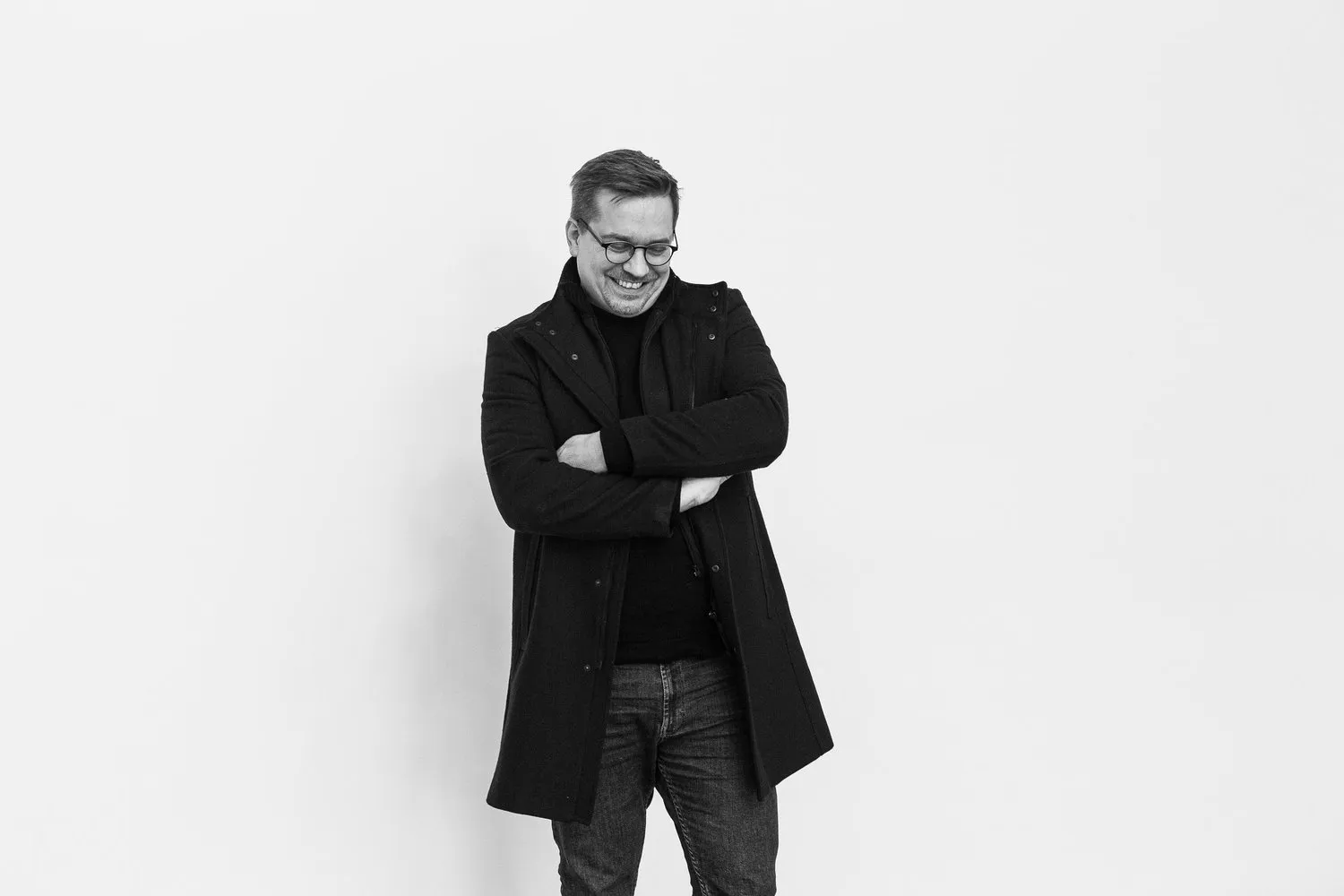
My works travel, and sometimes I travel after them. In July 2026 an invitation from the Kaputa Association takes me to Hämeenlinna in Finland for two weeks, made possible by the long-standing cultural exchange between Celle and Hämeenlinna. There I work on my series Heimat in the Finnish light.
- 2026"KI und Kunst" · Albert König Museum, Unterlüß
- 2022"Hidden Places" · KWS Art Lounge, Einbeck
- 2020"Hidden Places" · Serpil Neuhaus Galerie, Gütersloh
- 2019"Hidden Places" · Imago Kunstverein, Wedemark
- 2018"Hidden Places" · Gründerzeit Villa, Celle
- 2027Joint exhibition with the sculptor Norbert Diemert · Kunstkreis Kloster Brunshausen, Bad Gandersheim
- 2026"Werkschau" · BBK Celle, Celler Schloss
- 2025"#CARO" · BBK Celle
- 2024"Vielfalt ist Schönheit" · BBK Celle, Celler Schloss
- 2023"No Past, Funny Future" · Hämeenlinna, Finland
- 2022"Die Freiheit der Kunst" · BBK Celle, Celler Schloss
- 2021"Gestern Heute Morgen" · Kunstsalon, München
- 2020"Klimatisiert" · BBK Celle, Celler Schloss
- 2019"Bauhaus … Kunst heute" · BBK Uelzen
- 2018"Grenzenlos" · BBK Celle, Celler Schloss
- 2010, 2011"Kunst fördert Kinder" · Kunstverein Hannover
- 2026Artist in Residence · Kaputa Association, Hämeenlinna, Finland
- 2026Albert König Museum, Unterlüß
- 2024Sparkasse Celle Gifhorn Wolfsburg, Gifhorn · Four-part series of unique works
- 2023Kunstsammlung KWS, Einbeck
- 2011Designpreis Rat für Formgebung
Art · Questions