The search
A new phone number is set up in a minute. Then the search begins: where does the old one still appear? In the letterhead, in the Google profile, in a PDF that has been sent out for years, on the sign by the door.

Websites · with Kenala · Celle
And that is a good thing.
Your business changes. People join, services change, times change. That is why I now build websites as part of a connected whole.
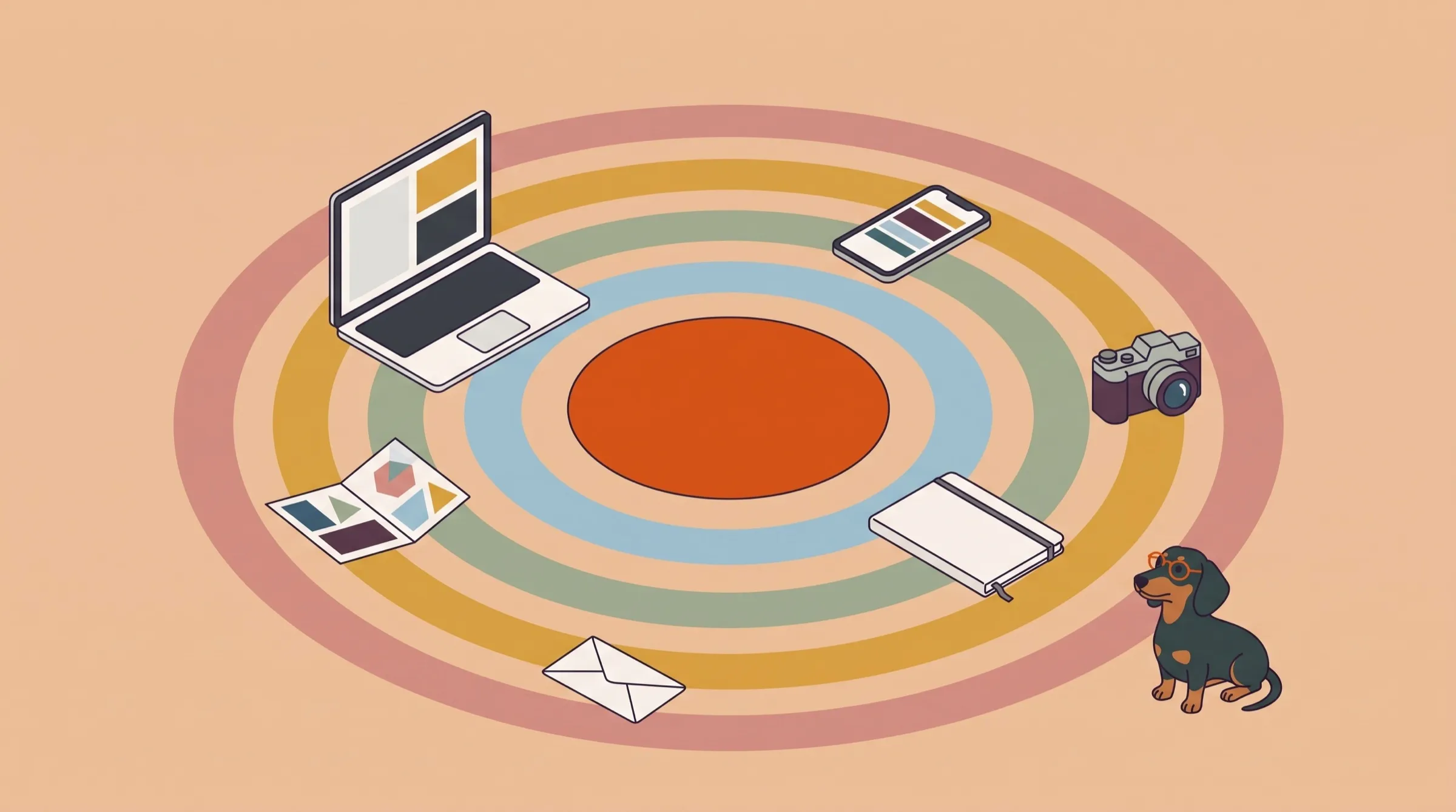
It is called Kenala. At its centre sits the DNA of your business. Your website, social media, and printed matter all draw on it. And you decide what goes out.
Websites · 01 · Where the time goes
On the website, in the Google profile, on Instagram, in the flyer at reception, in the PDF for new clients, in emails, with the agency that designed the logo. And in your head. Each of these places is fine on its own. The work lies in between.
A new phone number is set up in a minute. Then the search begins: where does the old one still appear? In the letterhead, in the Google profile, in a PDF that has been sent out for years, on the sign by the door.
Who thinks of the flyer? Who thinks of Google? Who tells the team? None of these tasks is difficult. You just have to remember all of them, every single time.
Which typeface was it again? Who has the logo file? Which pictures are we allowed to use? The answers exist, but they sit with someone else, who has no time until next week.
At some point the same information is in circulation three times, each time slightly different. Three sets of opening hours, two spellings of the name, a logo in a colour that officially no longer exists.
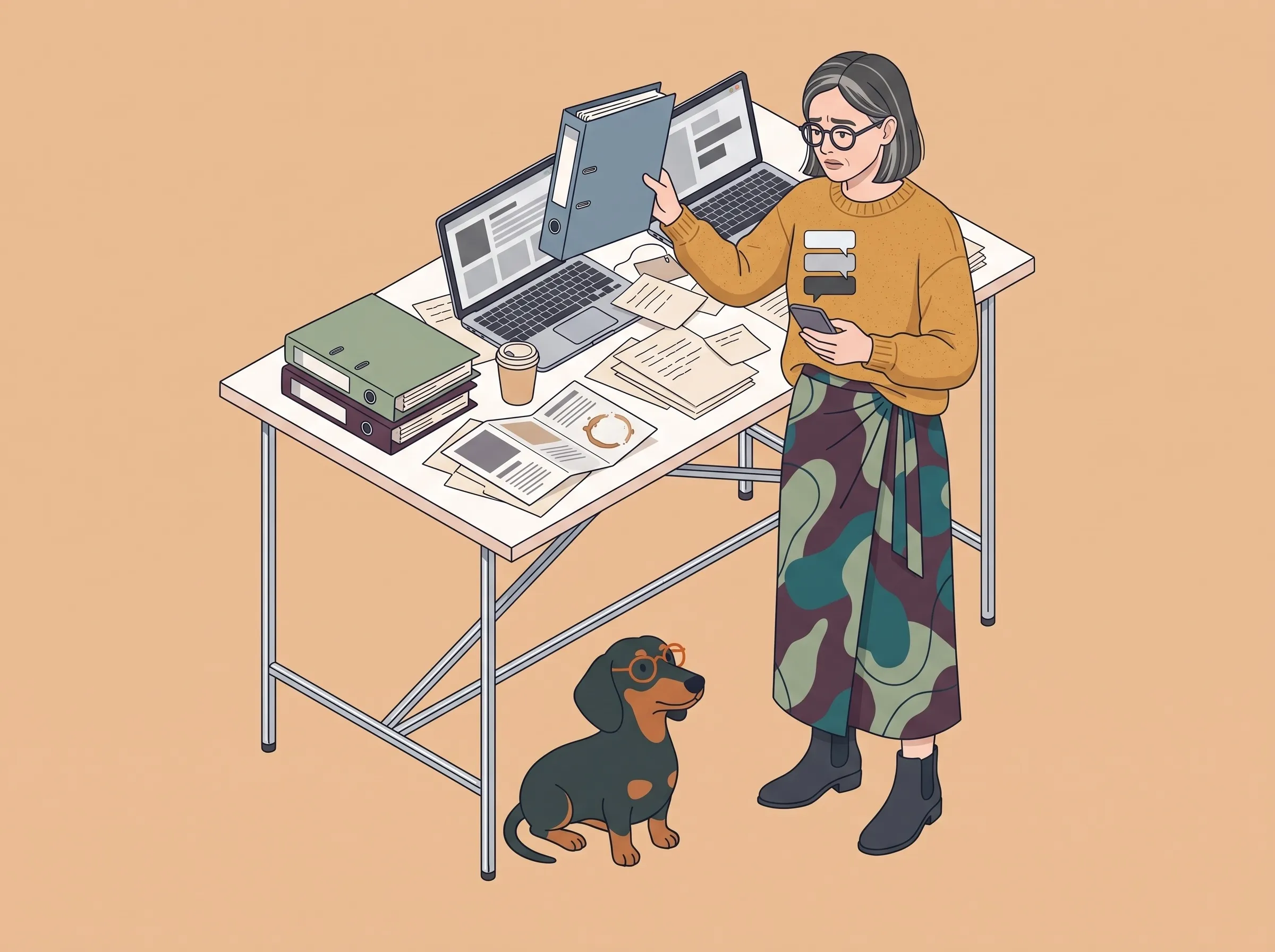
The programs work. The problem is the gaps between them.
Websites · 02 · An example
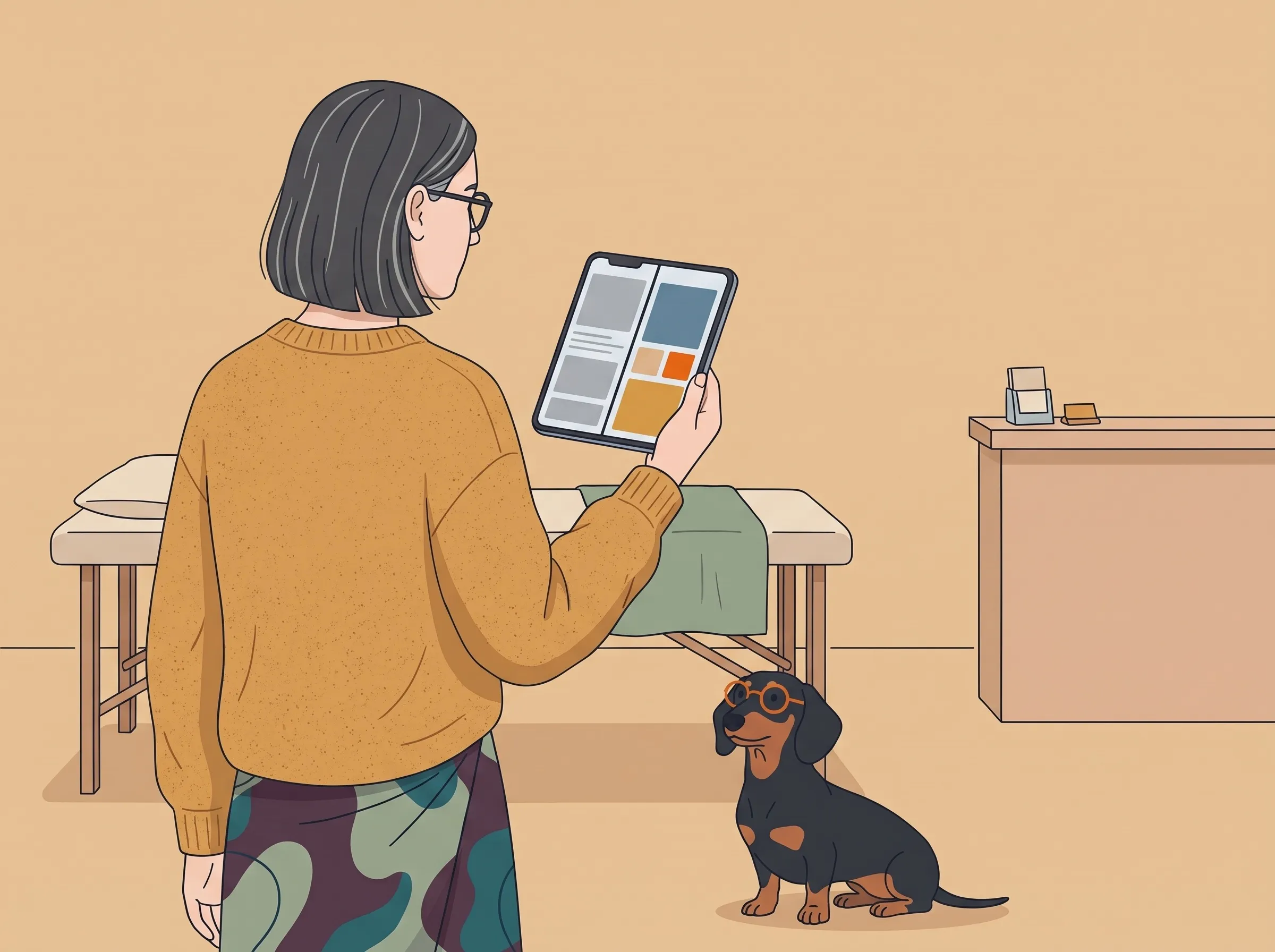
A practice changes its opening hours. Until now that has meant: have the website changed, check Google, write a post for Instagram, reset the patient information, print a notice, tell the team. Six places, often four different people.
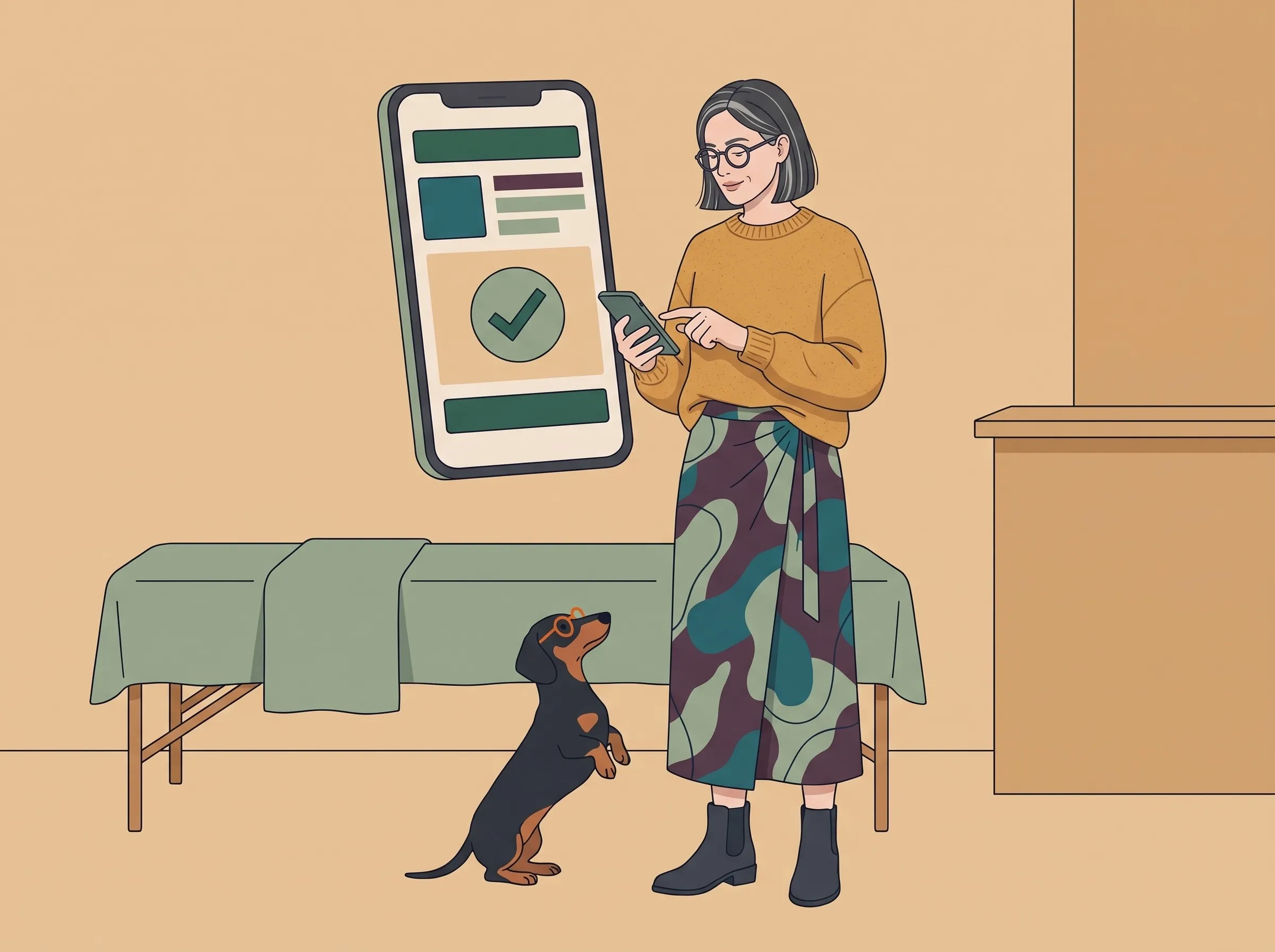
With Kenala you say it once: “From October we are open until 6 pm on Wednesdays.” The new time goes into your DNA, and Kenala knows everywhere the opening hours appear. For the website, a preview is prepared, old and new side by side. For Instagram, a draft in the practice’s own tone. The flyer and the notice get a note: please renew.
You look at everything and say yes. Only then does it go out.
Websites · 03 · Where I begin
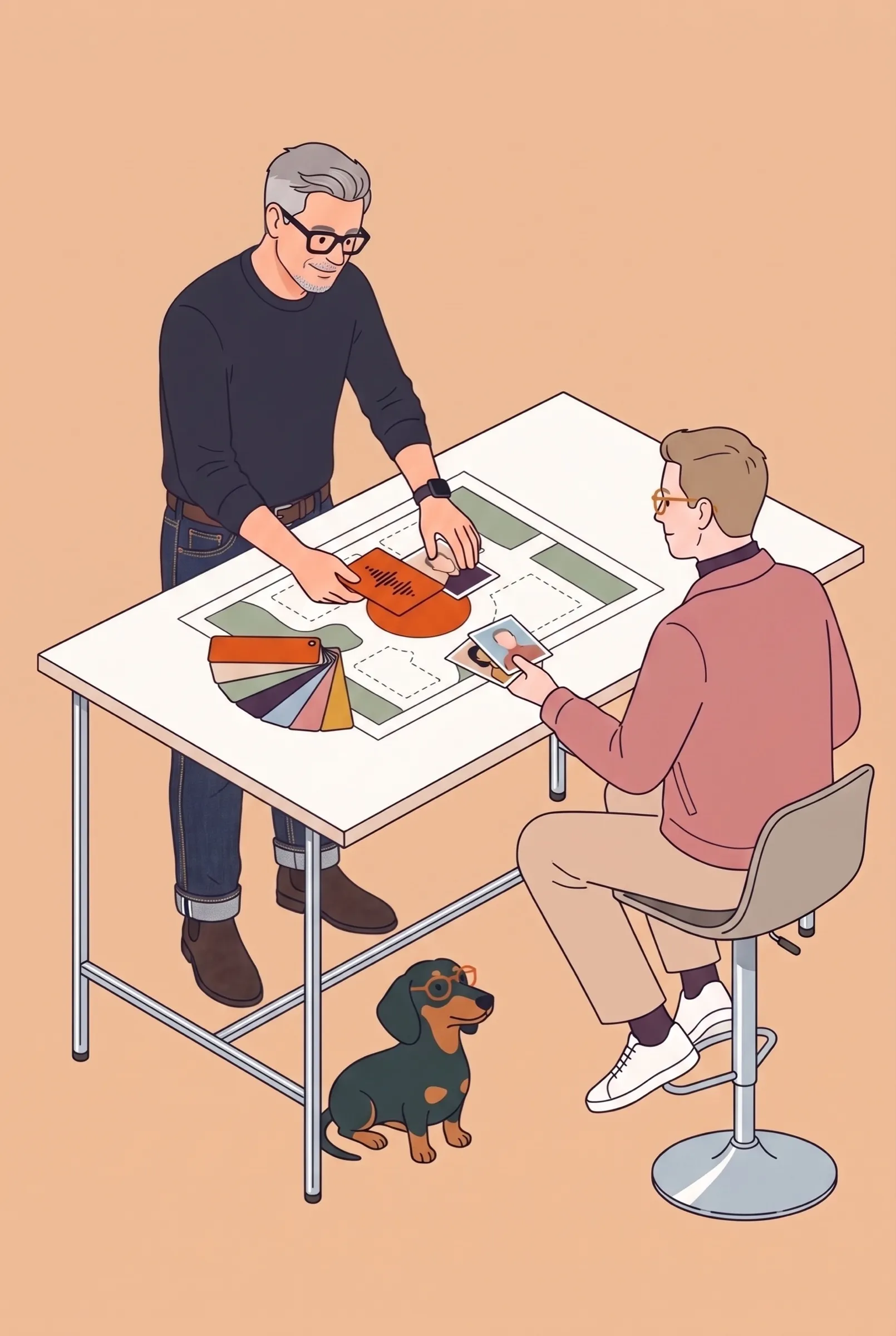
The DNA is the shared memory of your business. It holds who you are, how you speak, how you look, and which information must always be right. You read all of it and confirm it. Only then is it used.

Name, history, people, attitude.
Formal or informal, tone of voice, words you never use.
Colours, typefaces, logo, pictures that fit, and pictures that never fit.
Services, works, or products. And what is no longer available.
Addresses, times, contacts, figures, each with its source.
Requirements of your industry, mandatory information, what may never be claimed.
Who approves what before it is published.
Fundamentals without an expiry date, current matters with a review date.
I ask, collect, and write things down. You read and say yes. Anything unconfirmed is not used.
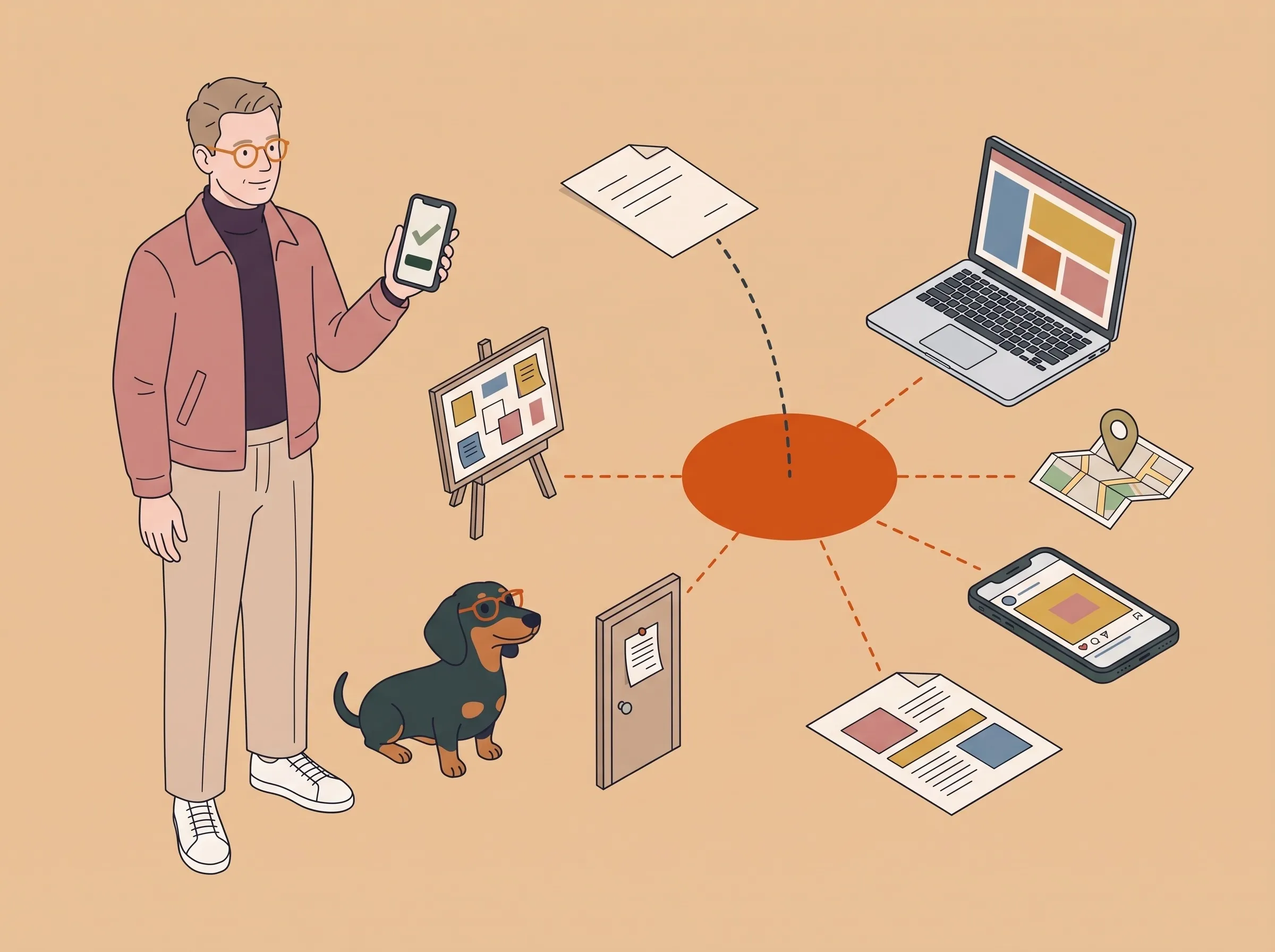
The opening hours are on the website, on the flyer, in the Google profile. The DNA remembers these places. When something changes, it is clear where it needs to follow.
Some things may be prepared, some things are never touched on their own: the legal notice, for example, or anything with legal weight. That is written in the DNA as well.

Websites · 04 · The name
“Kenal” means “to know” in Indonesian and Malay. That is exactly the point: a tool that knows your business. Out of more than six hundred names that were checked, this is the one that remained.
roman-thomas.de remains my presence as a photographer, designer, and artist. Kenala is the tool I use to work for clients. That is why it has an address of its own: kenala.de.
Your DNA, your approvals, and your access details are kept separately for each client and apart from my personal website, with their own protection rules. What belongs to you stays with you.
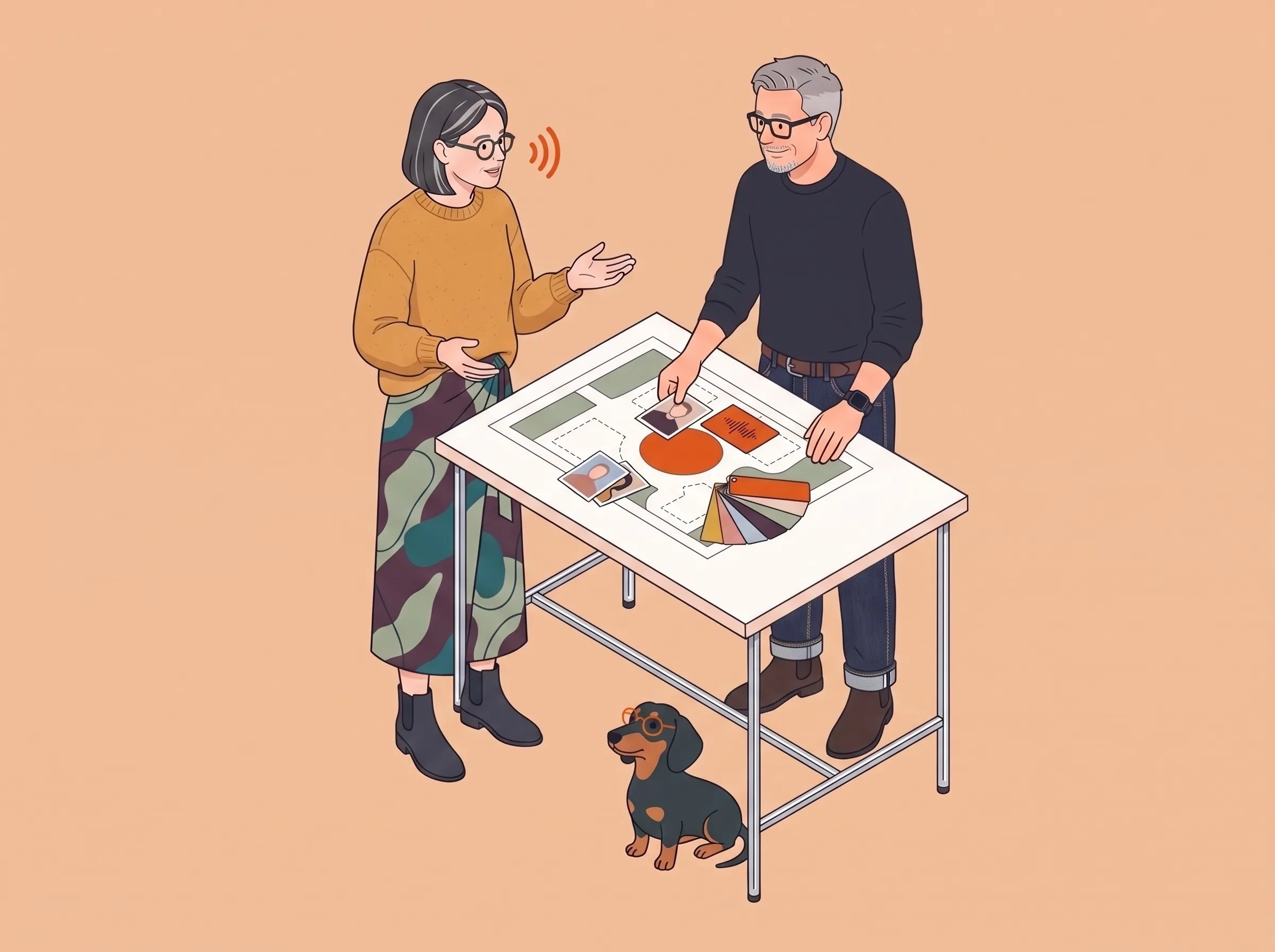
How the name was found is a story I tell in the journal: Why Kenala Is Called Kenala.
Websites · 05 · The website
I build the website itself the way I have always designed, only with different tools. Without WordPress, lean, fast, and set up so that it can grow with its tasks.
What is new is that it no longer stands alone. It is the most visible part of Kenala, but not the only one.
Websites · 06 · How the work will be
Once the centre is in place, every further step gets smaller. An Instagram presence does not have to search for its visual language first. A flyer does not have to find its typeface first. A newsletter does not have to work out how you sound. All of that is already there.
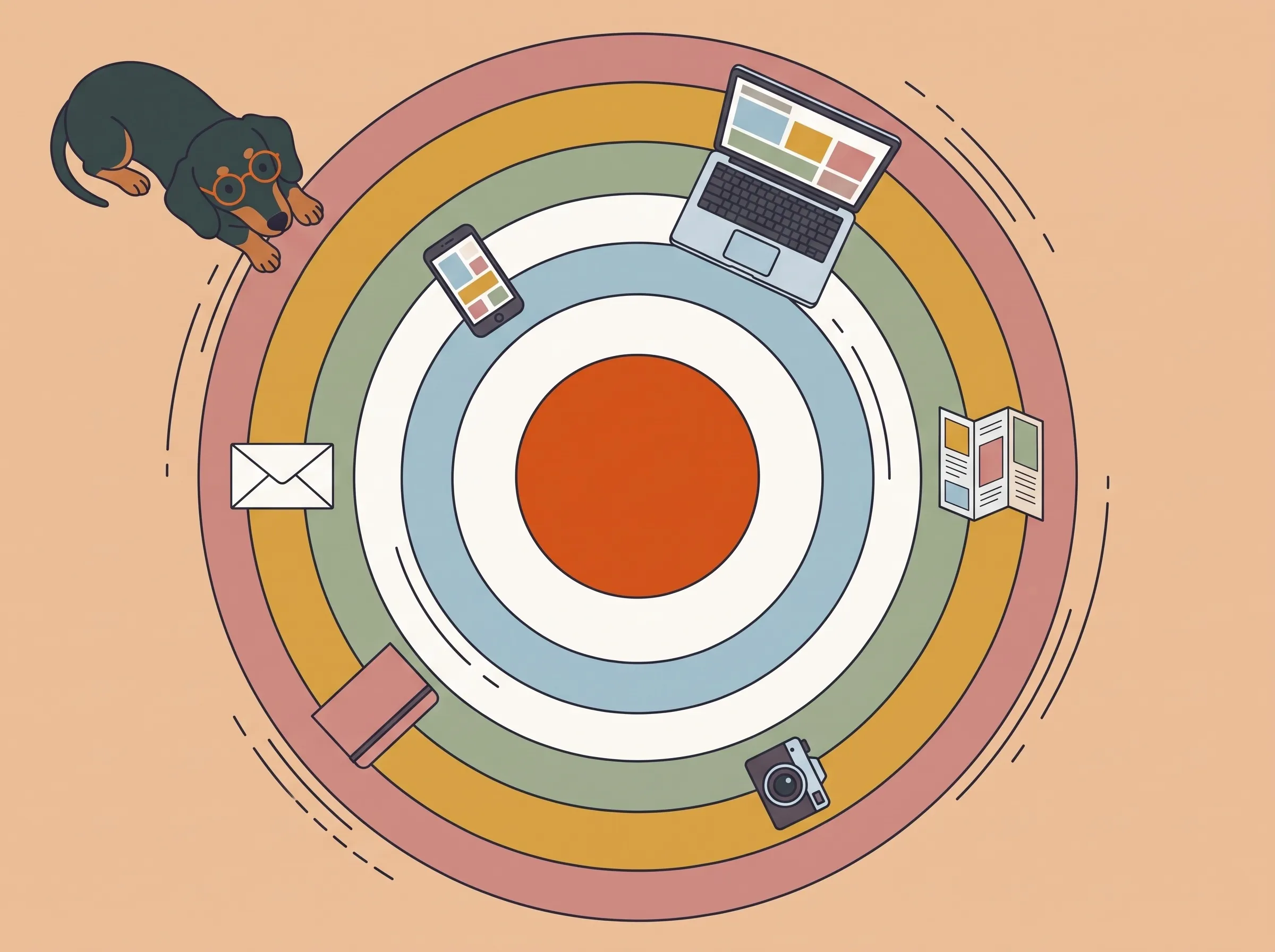
This is how working with Kenala will be: from the same DNA come the website, social media posts, printed matter, press texts, and newsletters. Each area takes what it needs instead of reinventing it. And each new area is added when you need it, not before.
Websites · 07 · Your access
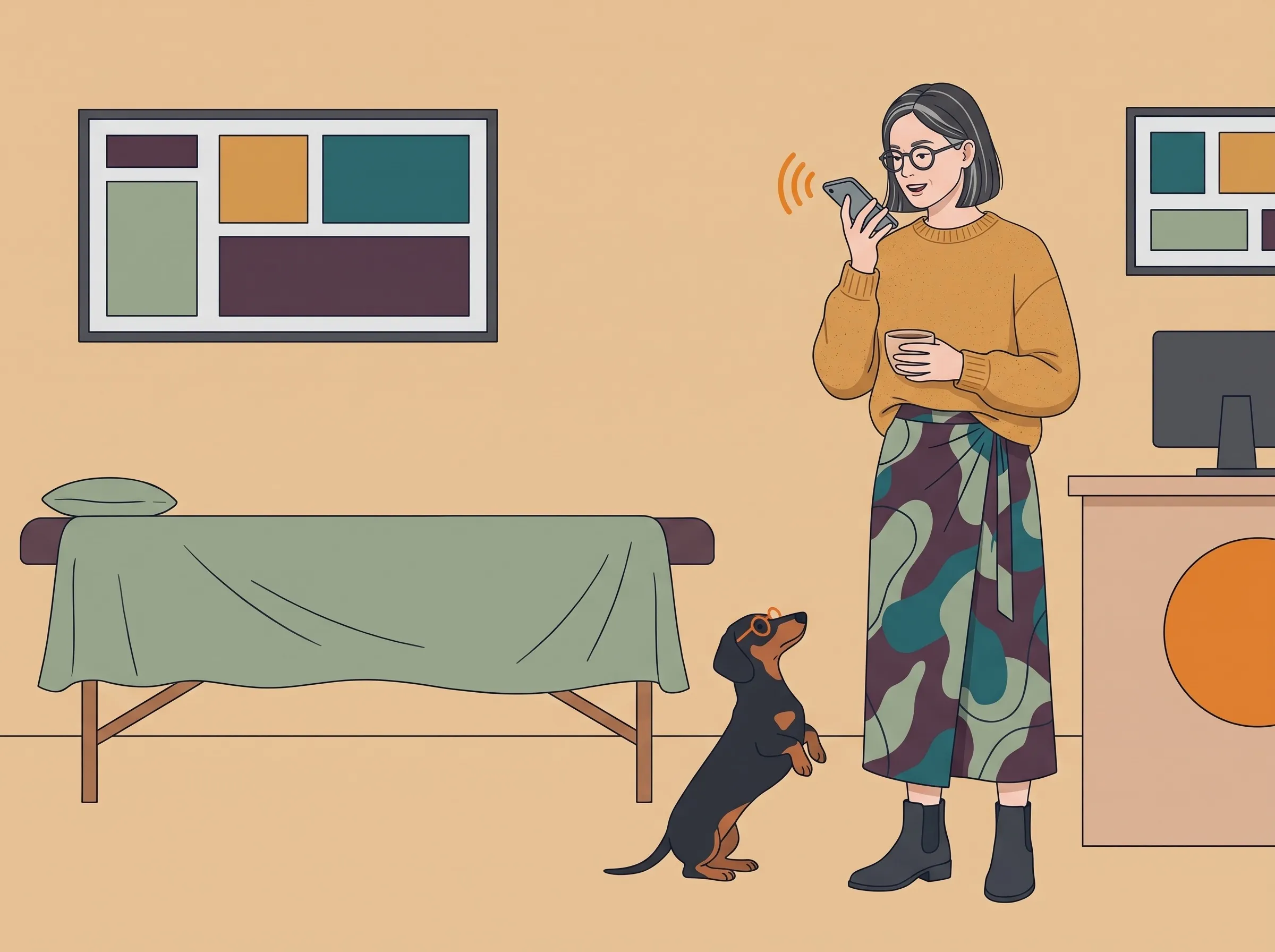
Kenala is built so that you do not have to learn a new program. You say what should change, on your phone, at your computer, or with the AI you already use. Kenala understands the request because it knows your DNA.
You get a preview, old and new side by side. If something is unclear, Kenala asks instead of guessing. And you approve with a single tap.
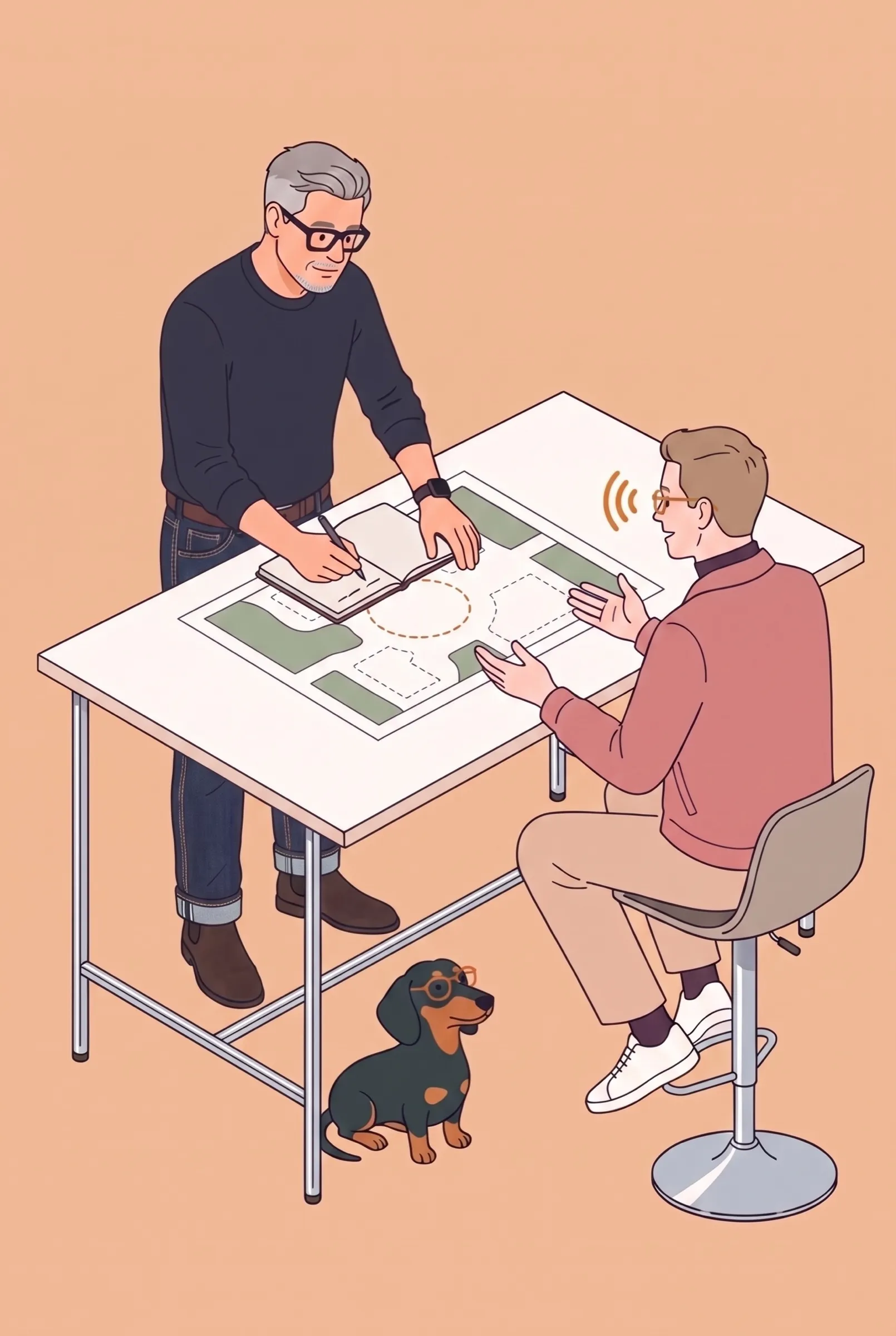
For everything that needs more conversation, there is your own project room: drafts, presentations, feedback, all in one place. And there is me. I remain the person you talk to.
Websites · 08 · In the background
Most time is not lost on the big decisions. It is lost on the small, repetitive tasks. Checking whether the site is reachable. Making sure the phone number is the same everywhere. Bringing pictures to the right size. Remembering that a certificate is about to expire.
Kenala takes care of things like these. Quietly, in the background, and only with a message when something is not right.
Automation should take work off your hands. Not push you into producing even more.
Websites · 09 · Control
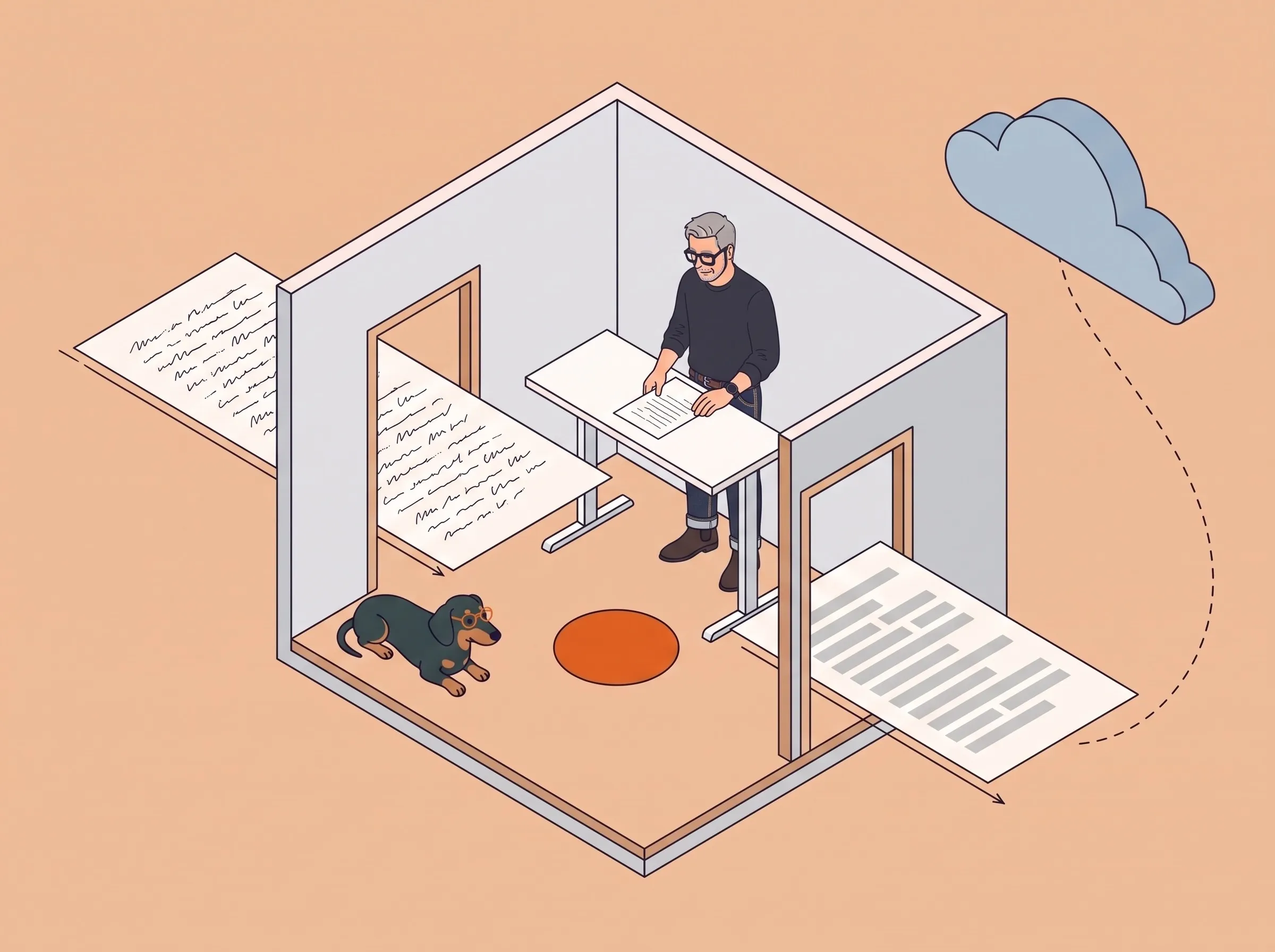
Not everything that can be created automatically should be published automatically. Kenala follows a simple rule: Kenala may prepare a great deal. Nothing is published without your yes.
Every change arrives as a preview, old and new side by side. Nothing happens out of sight.
The legal notice, the privacy policy, and anything with legal weight are never touched by Kenala on its own. Which places these are is written in your DNA.
Who approved what, and when? You can look it up later. That, too, is a relief when someone asks.
Names, addresses, or patient data do not belong in third-party AI services. Where I work with documents like these, they are made unrecognisable on my own computer first.
Websites · 10 · In flow
A business is never finished. Its language develops, pictures are renewed, one channel becomes important, another disappears. Laws change, and so does your own idea of how you want to work.
A good tool therefore has to do two things at once. It has to give stability. And it has to allow change. The DNA is the stability. Everything else is free to move.
That is why I now think of websites more as a garden than as a building. A building is finished when the keys are handed over. A garden only begins then.
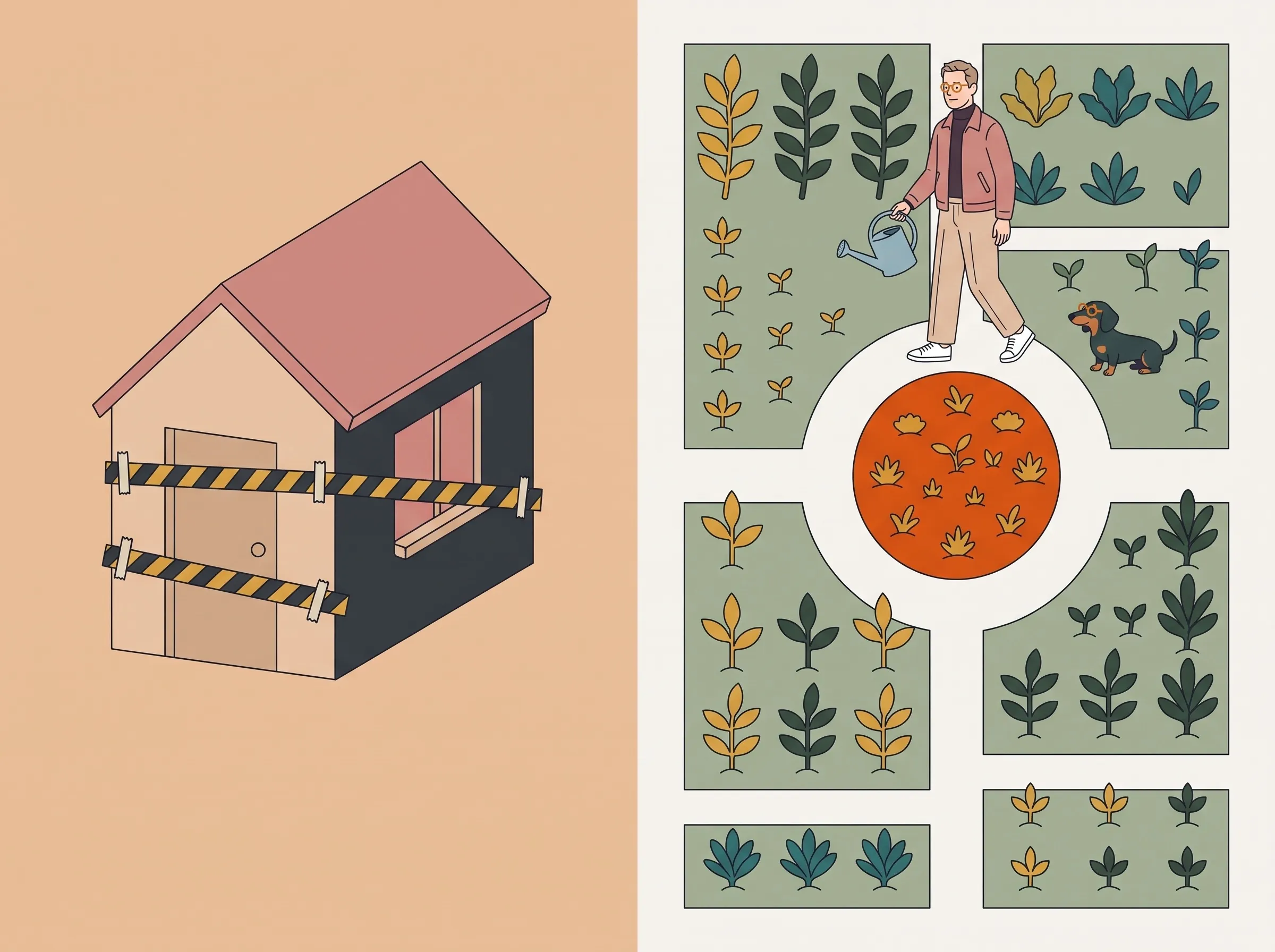
Everything is in flow. The core stays recognisable.
More on this in the journal: A Website Is Never Finished.
Websites · 11 · Where this comes from
I did not design Kenala on the drawing board. I built it for myself first.
As a photographer, designer, and artist, I work on very different things: commissions, exhibitions, websites, quotes, social media, work for associations. At some point I had too many separate tools and too many things I had to explain from scratch every time.
So I began to build my own working environment with Claude, an AI. Separate helpers turned into a studio with fixed rooms, fixed rules, and a shared memory. Some things I abolished again, because they created more work than they saved.
Kenala grew out of this studio. My own website was the first to be looked after this way.
More about the tool: Kenala. The whole story: I Was My First Client.
Websites · 12 · What it saves
I will not give you percentages. How much time you save depends on how you work today. The mechanisms behind it, though, are simple.
A piece of information is maintained in one place, not in six.
Every new area costs less, because visual language, tone, and rules are already settled.
Small changes do not need a service provider every time.
What someone would otherwise have to check by hand runs in the background.
When someone leaves the business, their knowledge of processes and rules does not leave with them.
Websites · 13 · The beginning
We talk about what you do and what is currently costing you time.
I ask, collect, and bring it together. You read and confirm.
It grows out of the DNA. You see it beforehand and approve it.
Social media, printed matter, newsletters, maintenance. At the pace that suits you.
Websites · Questions
Tell me what you are working on right now and what is costing you time.
Let’s talk →