A festival for the dead, built in an old cloth mill
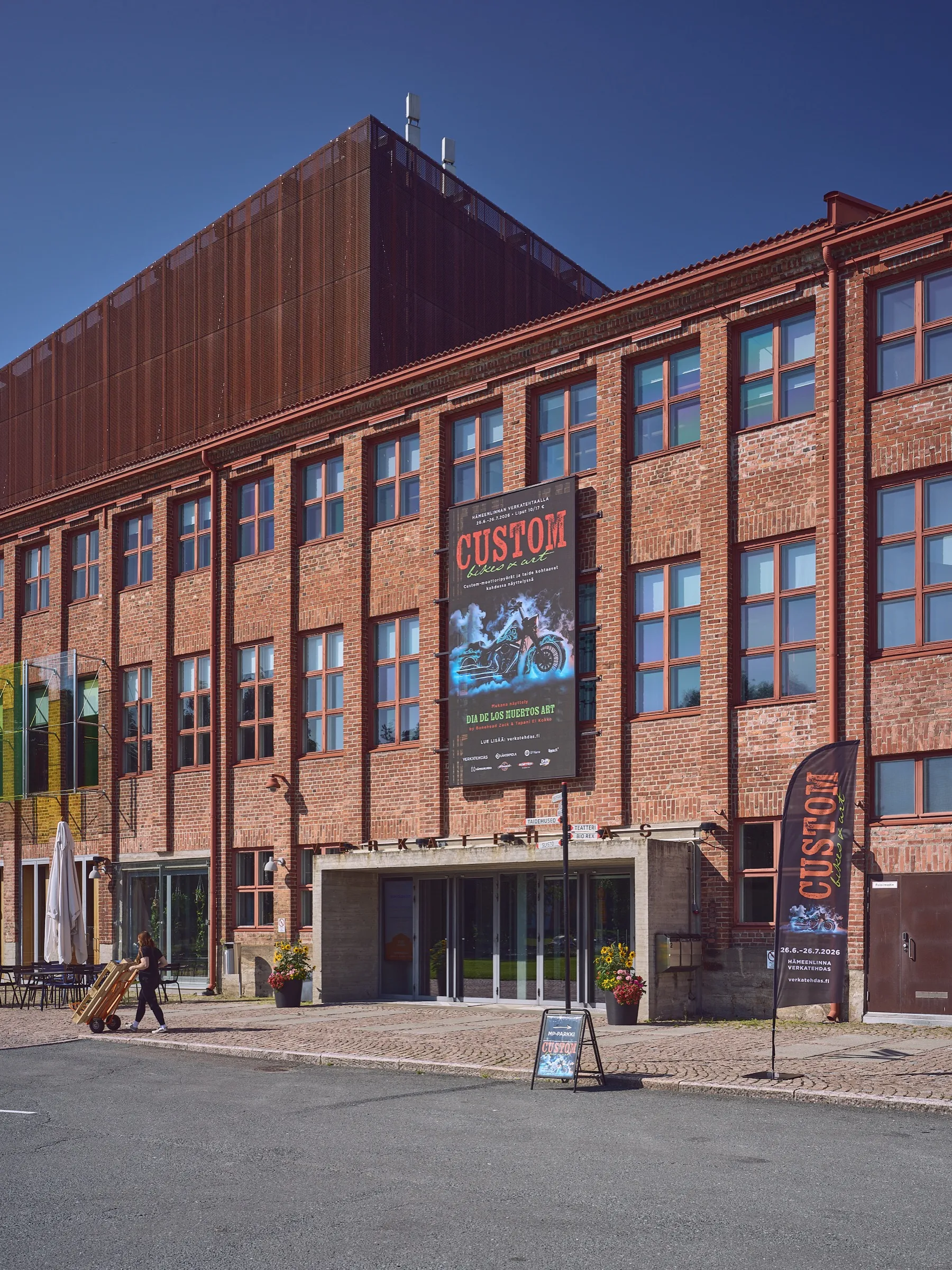
Honestly, I did not come for the motorcycles. What draws me is this old industrial site. I had already been out taking photographs during the day, and I wanted to see what it looks like from the inside. When the woman at the ticket desk said there was also an art exhibition upstairs on the first floor, alongside the motorcycles, I had not expected that at all and went straight up.
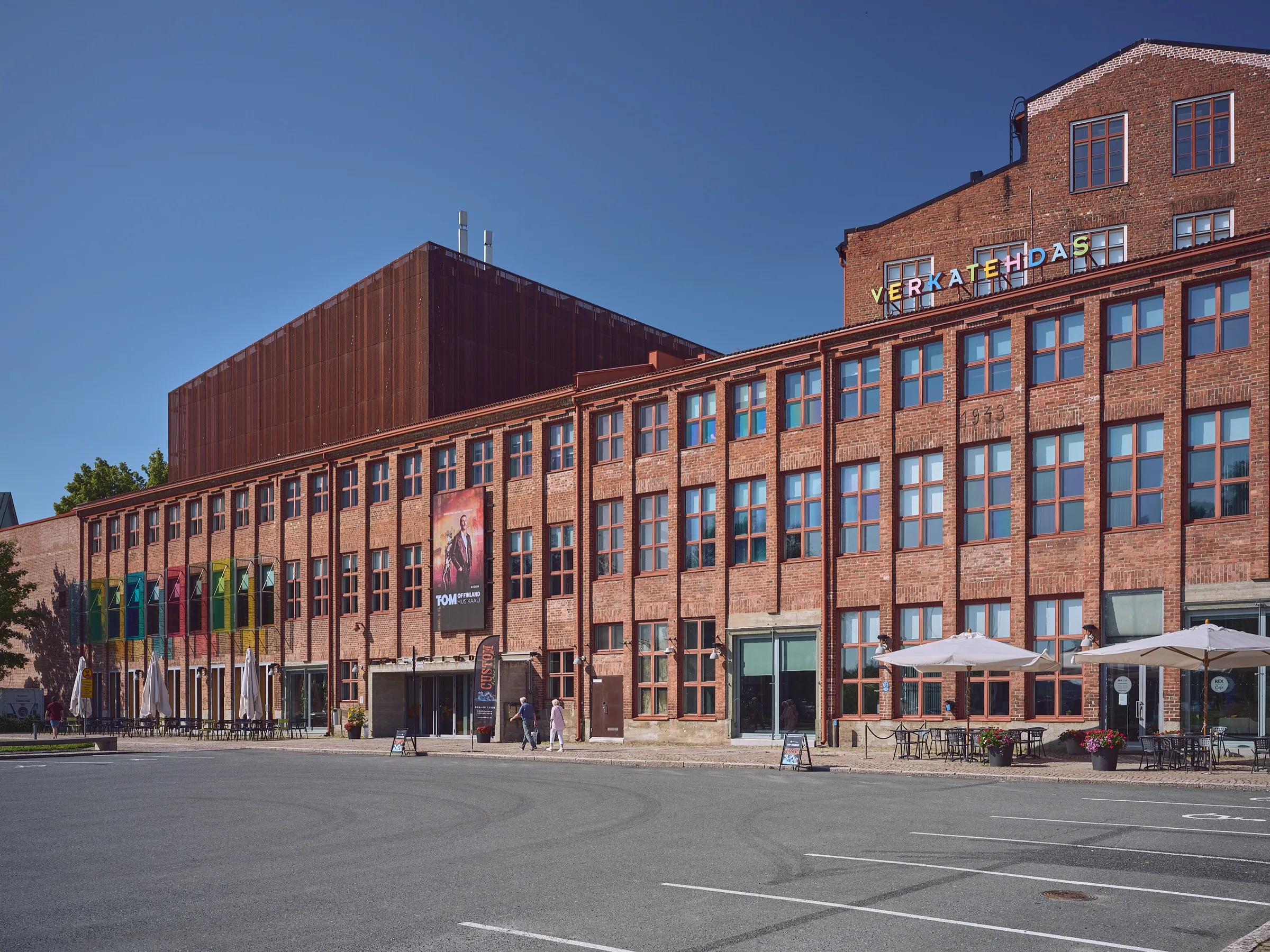
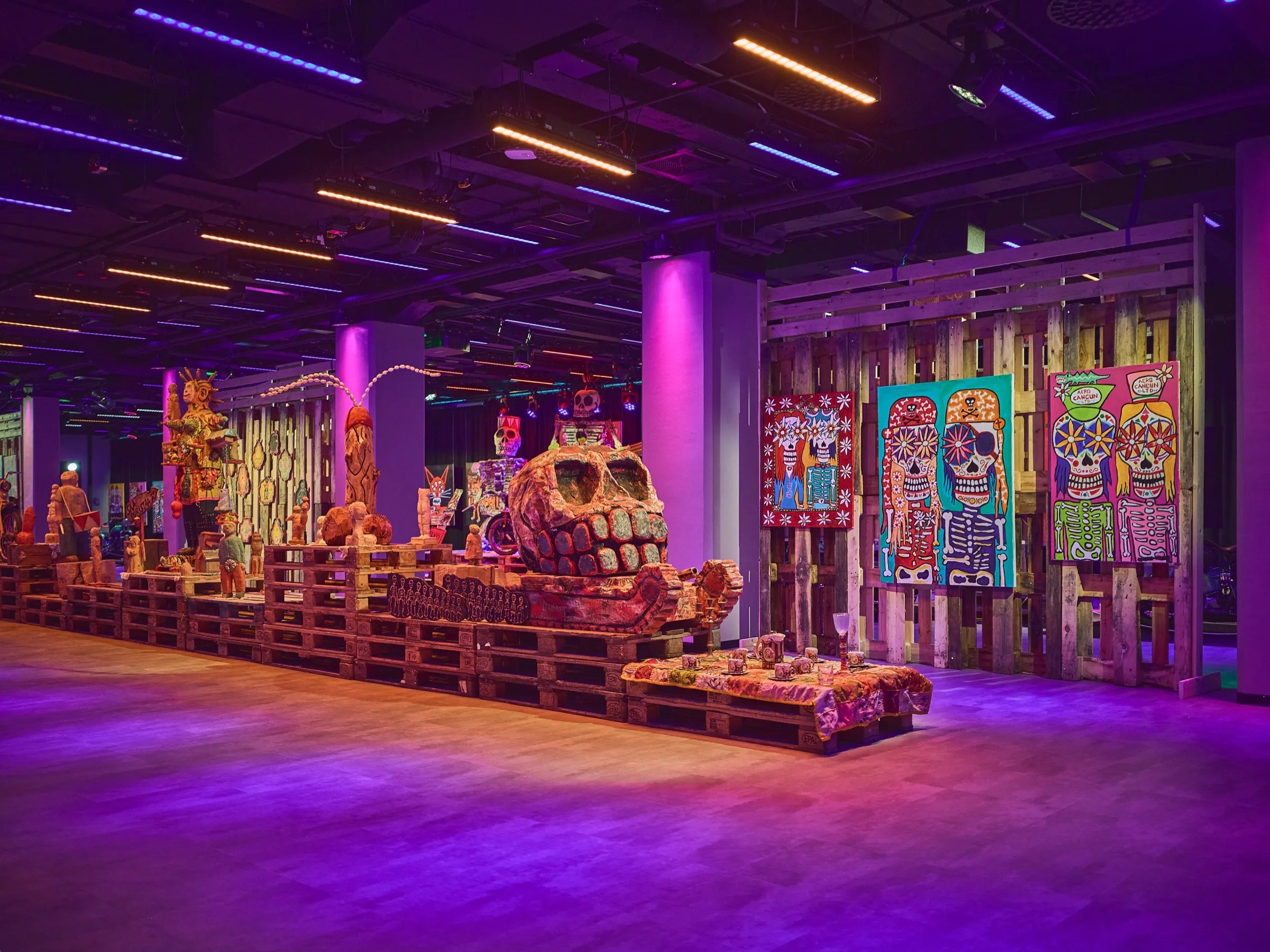
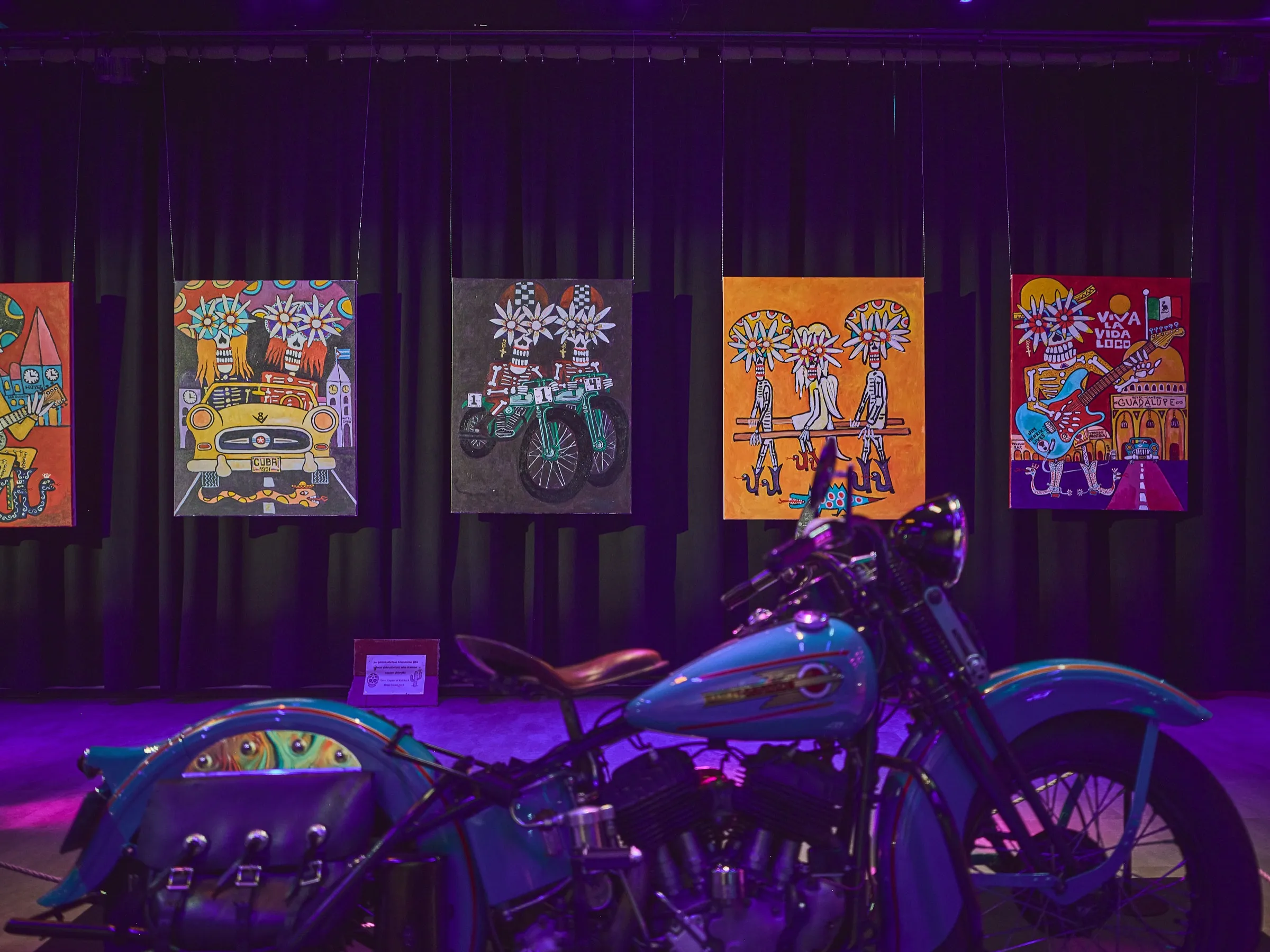
Upstairs, one floor above the motorcycles, lies a hall they call the Verki. Inside it is dark, the walls are black, and the light lies over everything in violet, pink and green. Mexican classics play from the speakers the whole time, which makes for a really lovely mood. Then you see what this room is built from: wood, paint, skulls and motorcycles.
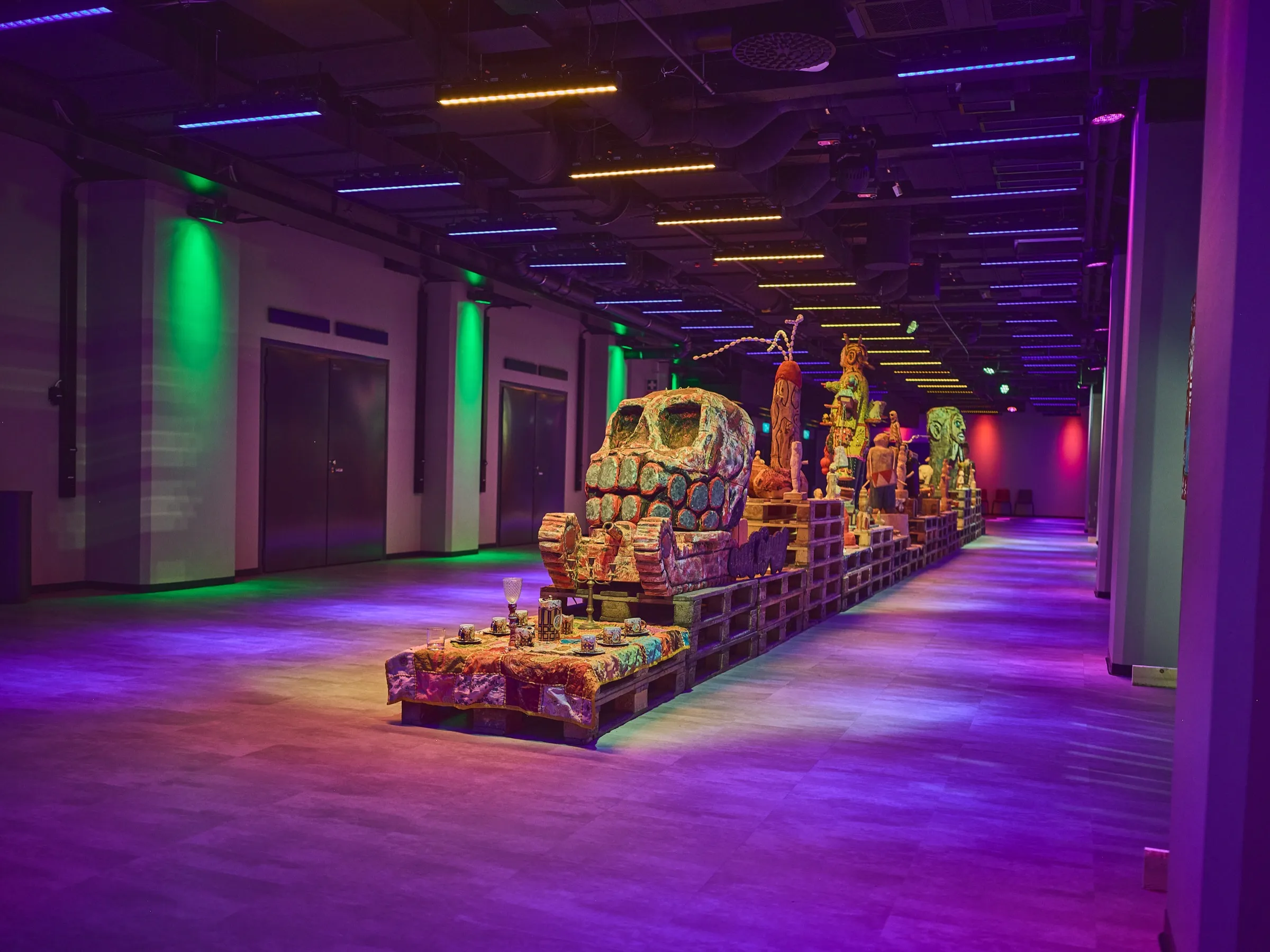
The exhibition is called Custom Bikes & Art, and the part I care about goes by the full name Dia de los Muertos and Sexy Carvings Art. One floor below, in the large Vanaja hall, customised motorcycles stand as if in a sanctuary, each its own piece of craft from many countries. Upstairs in the Verki, Mexican death symbolism, painting and raw wooden sculpture meet. The idea of bringing motorcycles and art together like this came from Juha Rouhikoski, who helps run the house and is also the artistic director of Lux Helsinki.
What makes it special for me: during the residency I am staying on this very site, in the little house of the former factory administration, only a few steps from this exhibition. So this summer I am living next door to a festival about death. It runs until 26 July 2026.
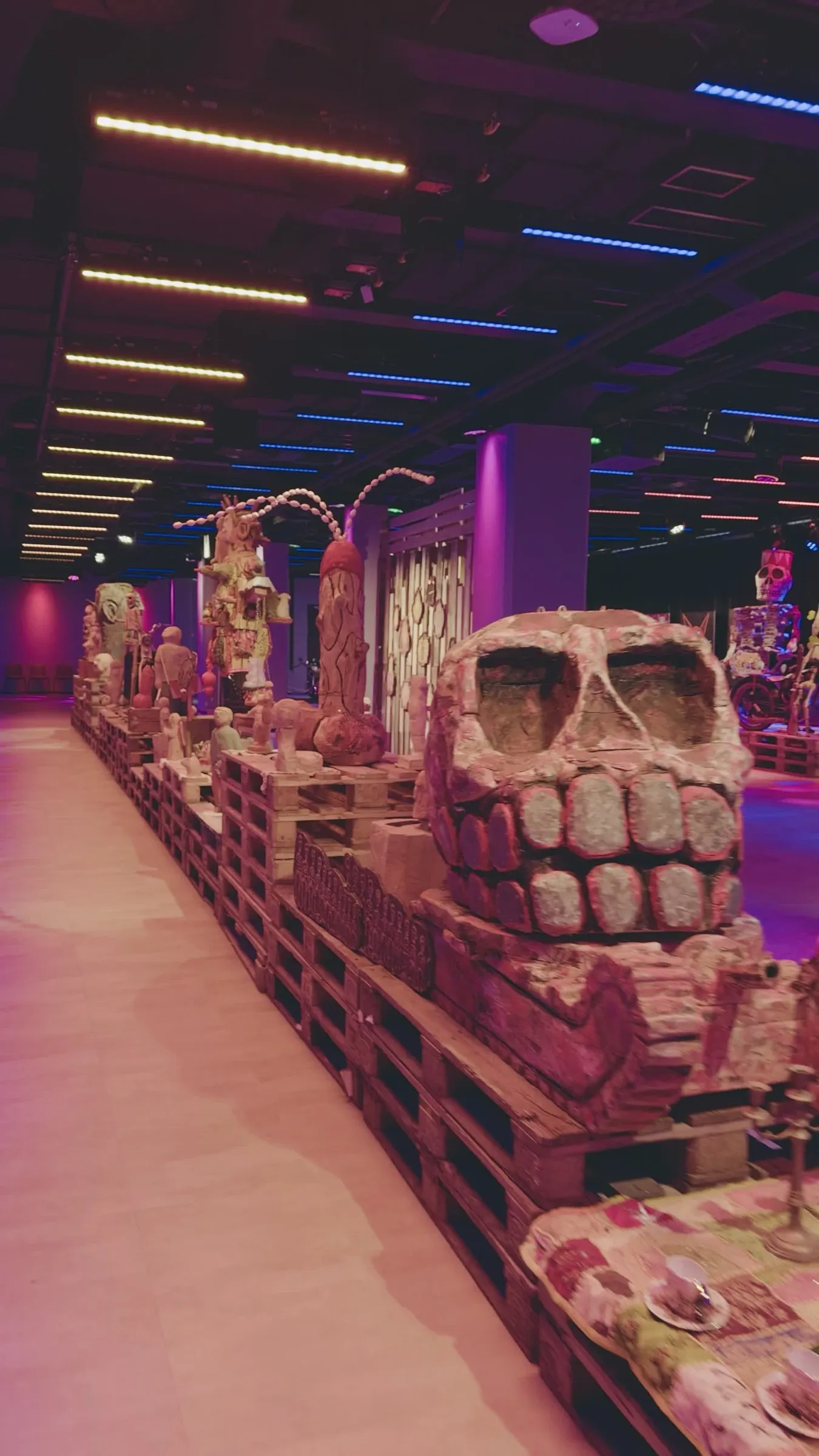
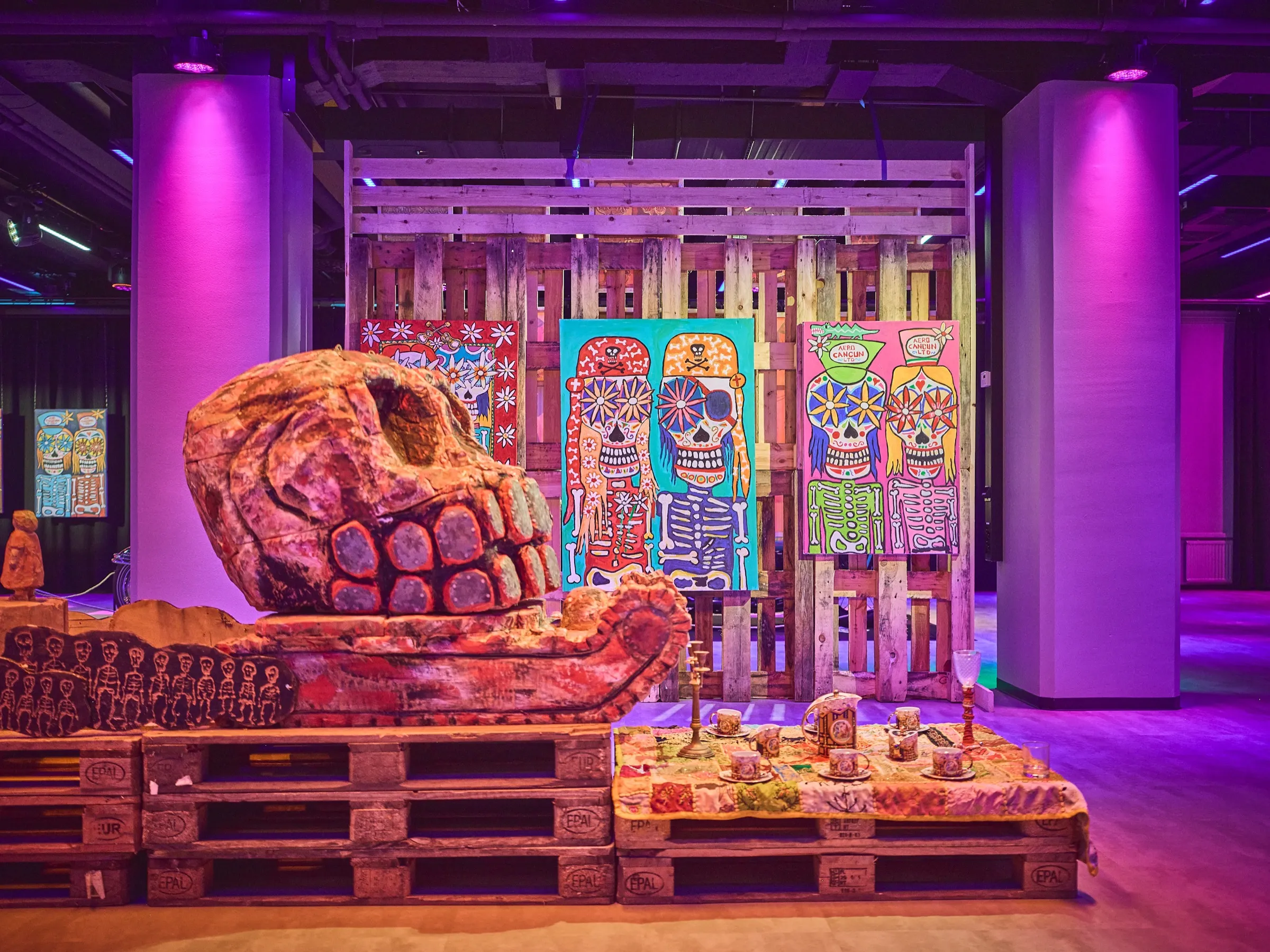
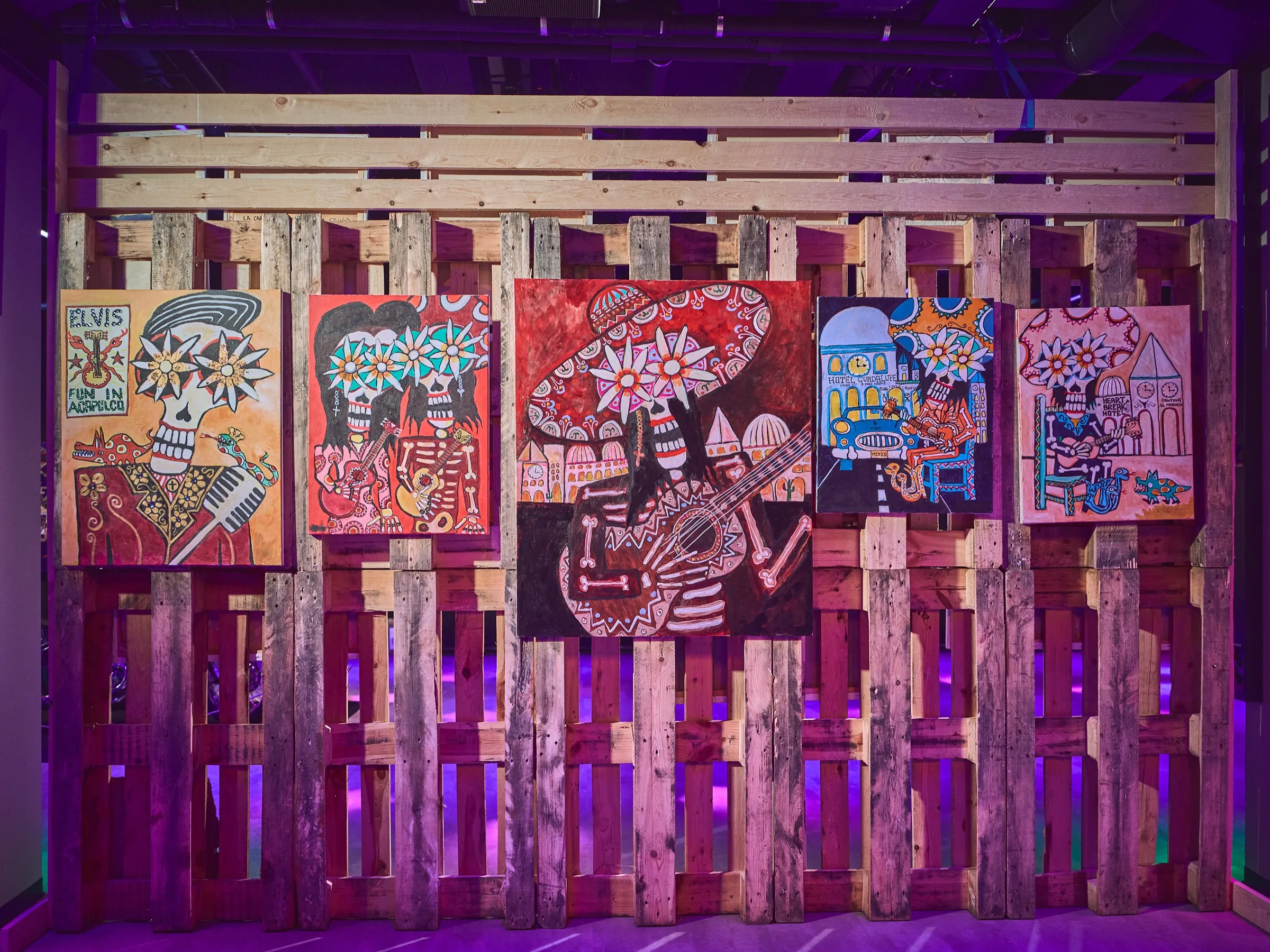
None of this confused me at first. The music, the light, the skulls, it felt like being in the middle of Mexico. I even recognised one of the songs with Shazam, Urge by Juan Valentín. I quite naturally assumed that Mexican artists were exhibiting here. There was no hint of context anywhere. Only at home, reading up, did I realise that this is not the case at all: behind the works stand two Finns.
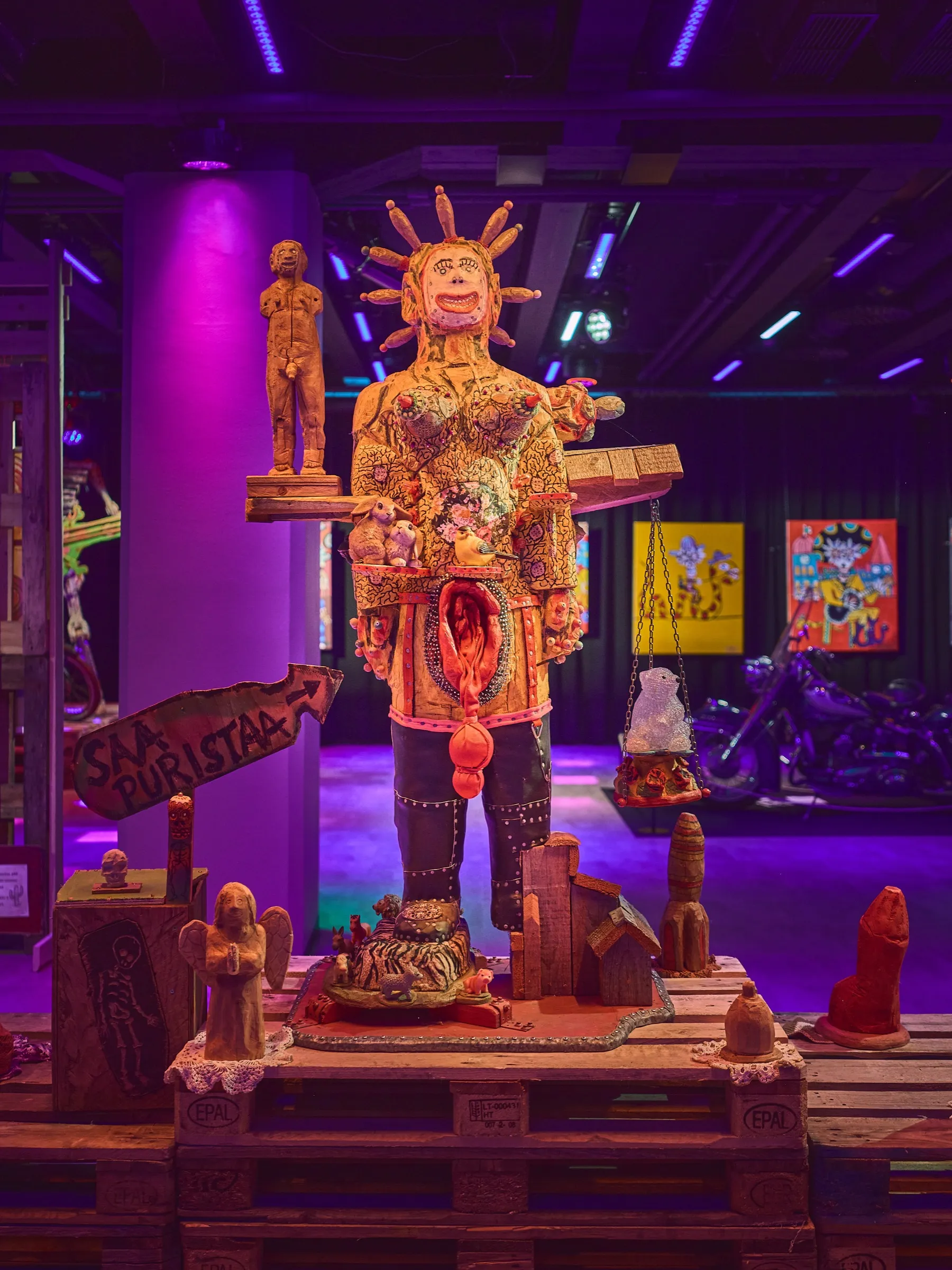
One is Tapani Kokko, born in 1969, trained at the Finnish Academy of Fine Arts and today one of the country's most singular sculptors. He carves his figures from wood and covers them with pearls, glitter, fabric and paint. They sit between folk art, the Baroque and what one calls Outsider Art, and they carry a humour all of their own. His work hangs in major Finnish museums, and he is represented by Galerie Forsblom. In this exhibition he calls himself, with a wink, Tapani El Kokko.
The other is Sakke Järvenpää, whom many know as a musician from Sleepy Sleepers and the Leningrad Cowboys. As a painter he calls himself Bonehead Zack. He began painting in earnest during the pandemic, because, as he puts it, there was nothing else left to do. He is drawn to the link between life and death in the Día de los Muertos, and that is exactly what his paintings tell of here on the walls, in strong colours, between tattoo, comic and Mexican imagery.
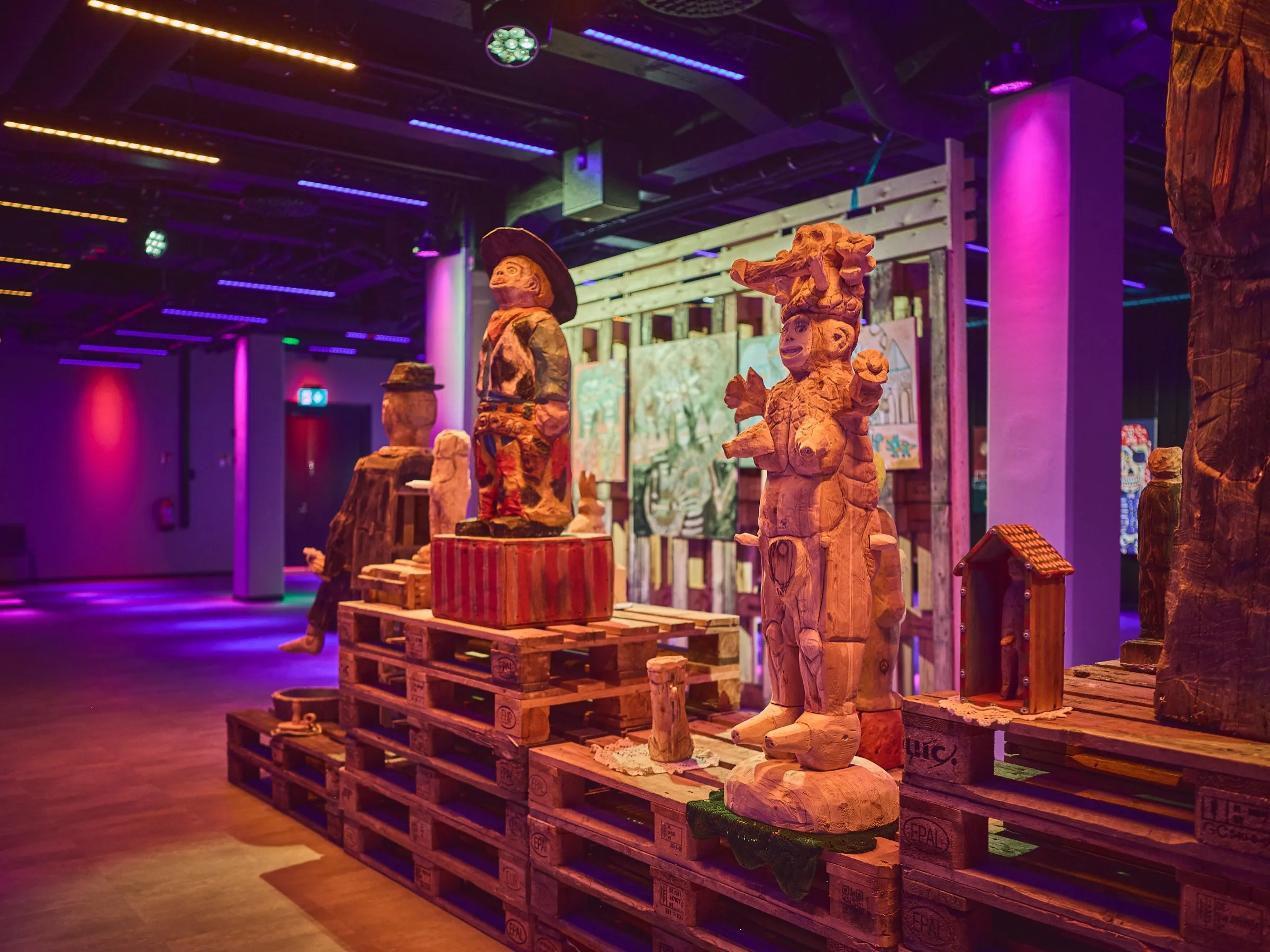
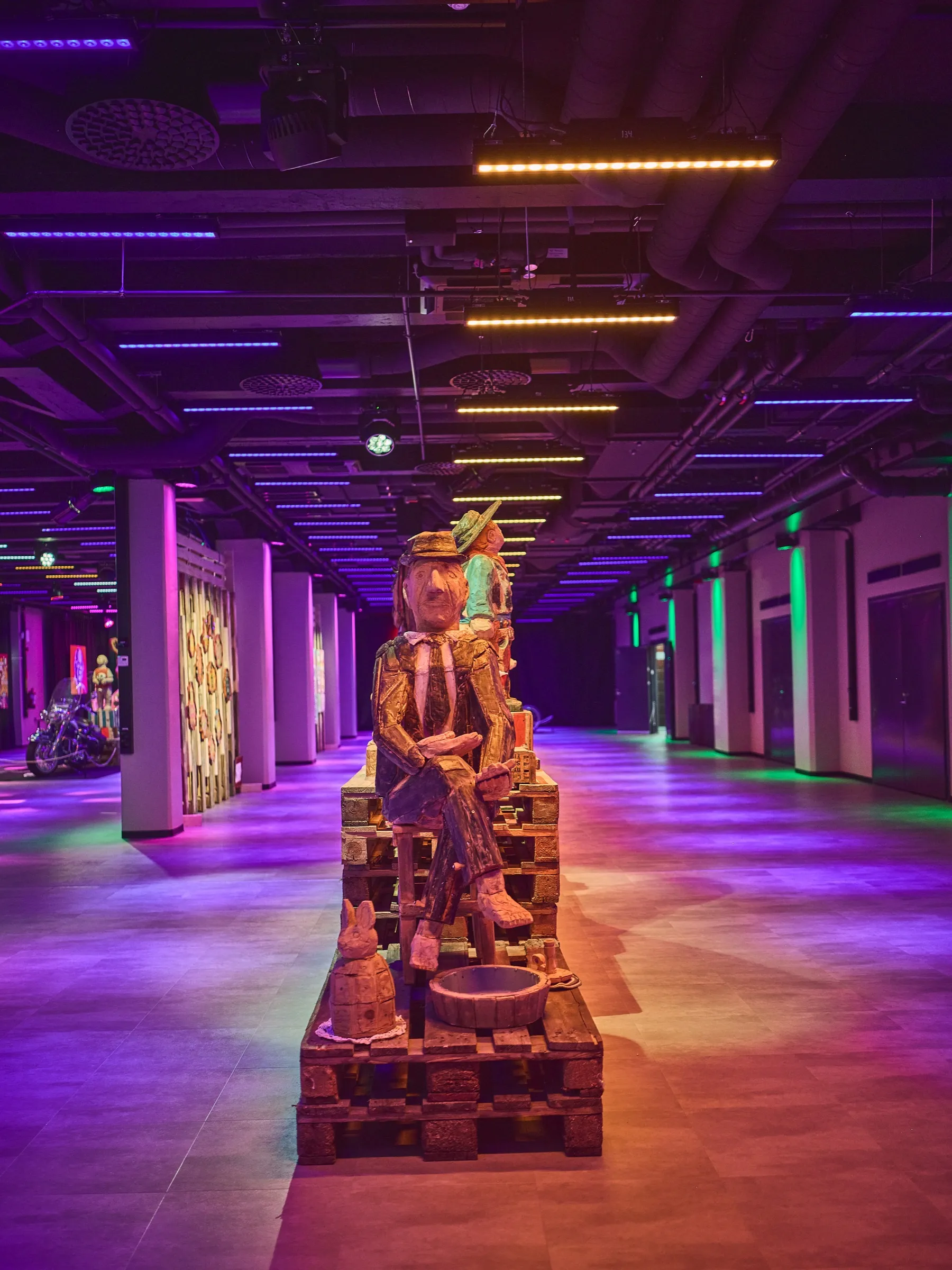
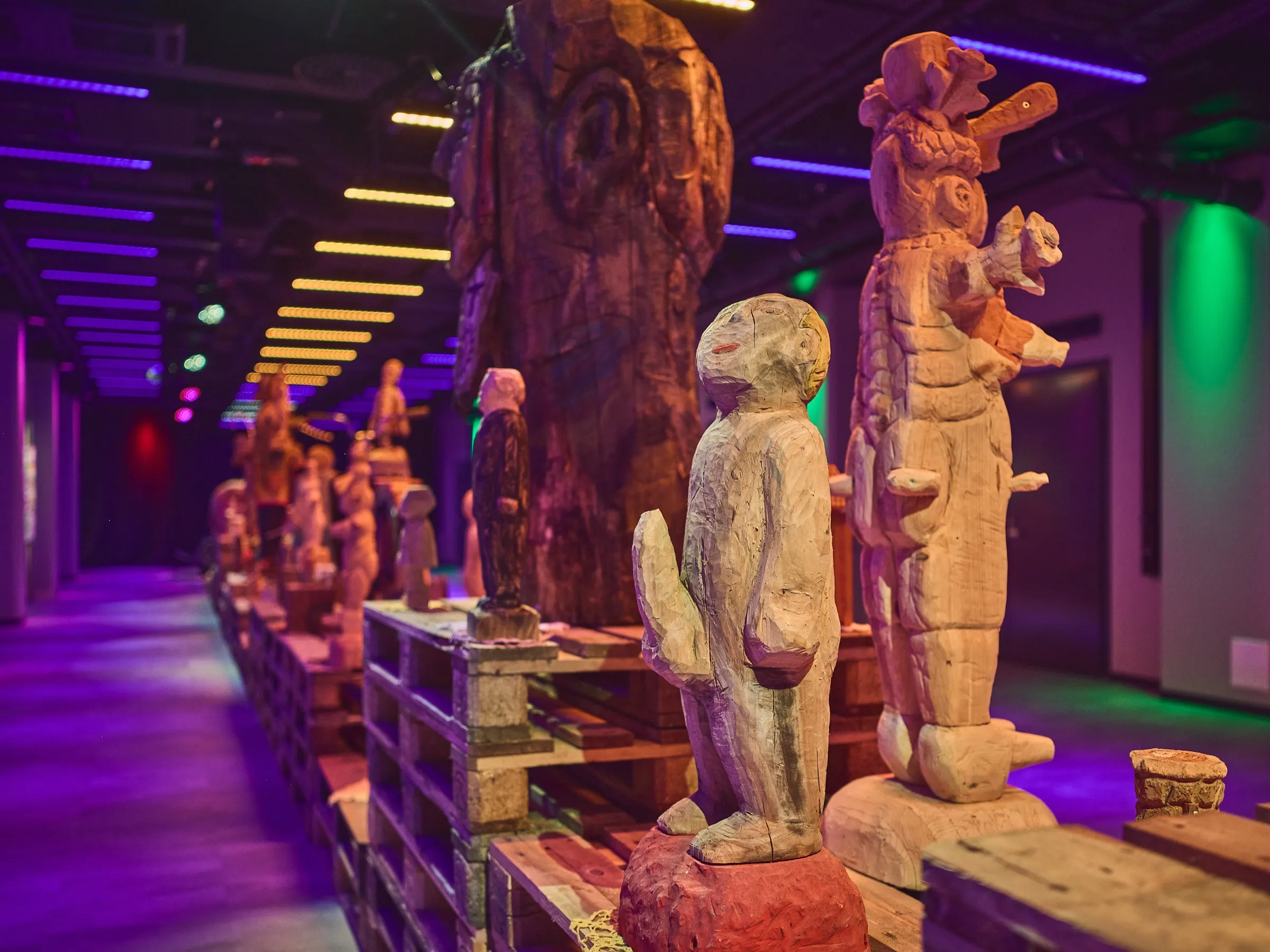
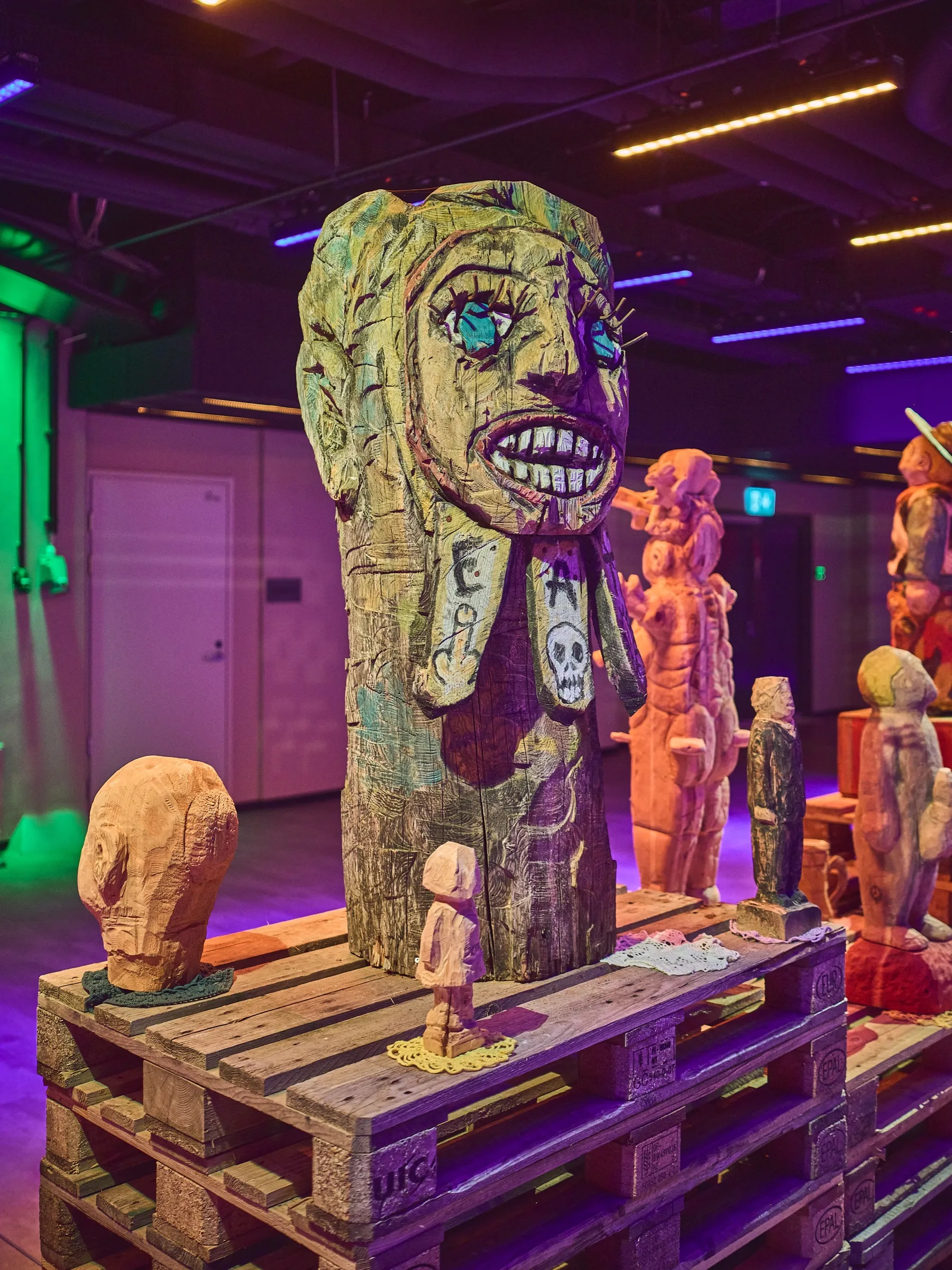
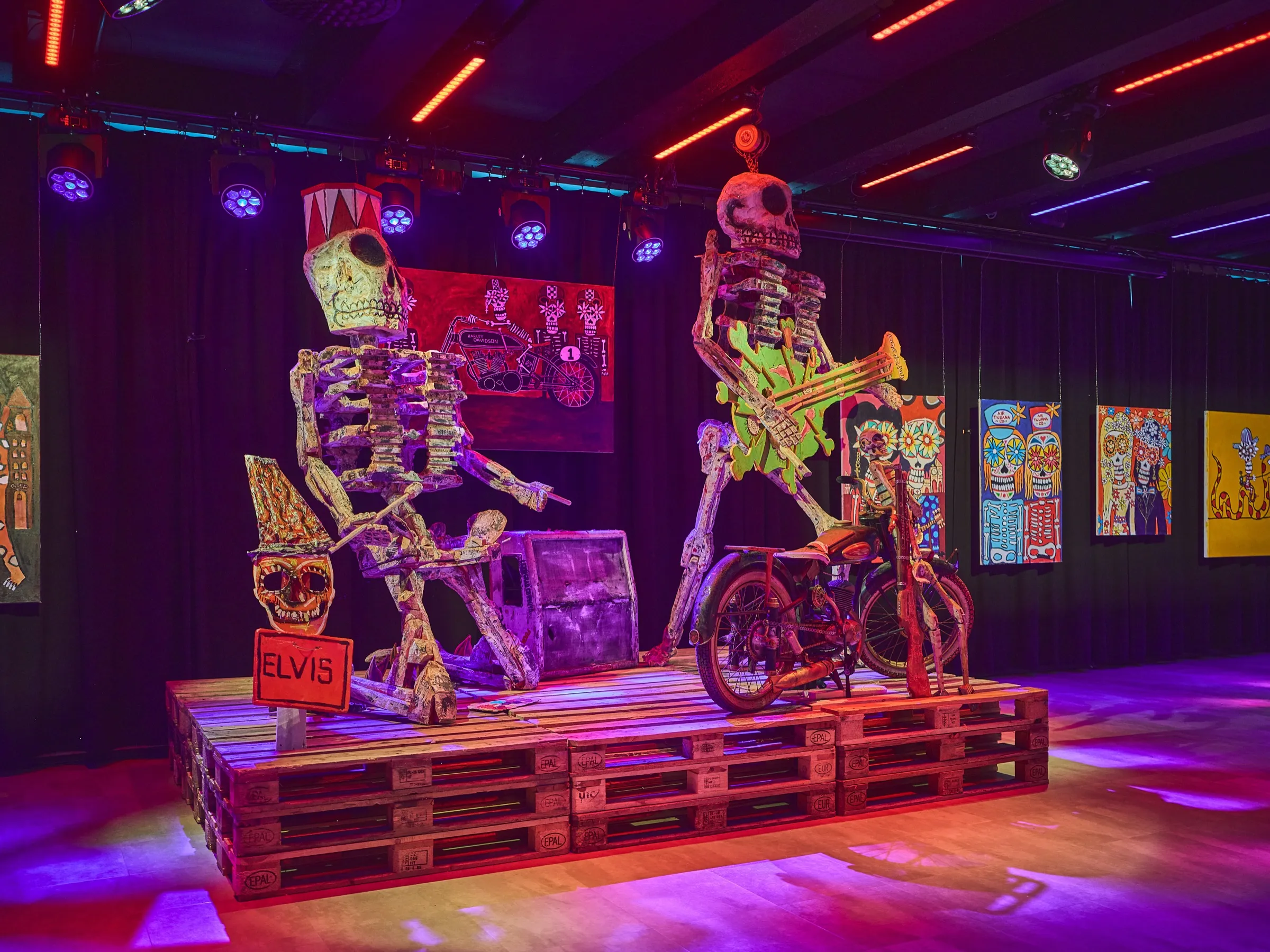
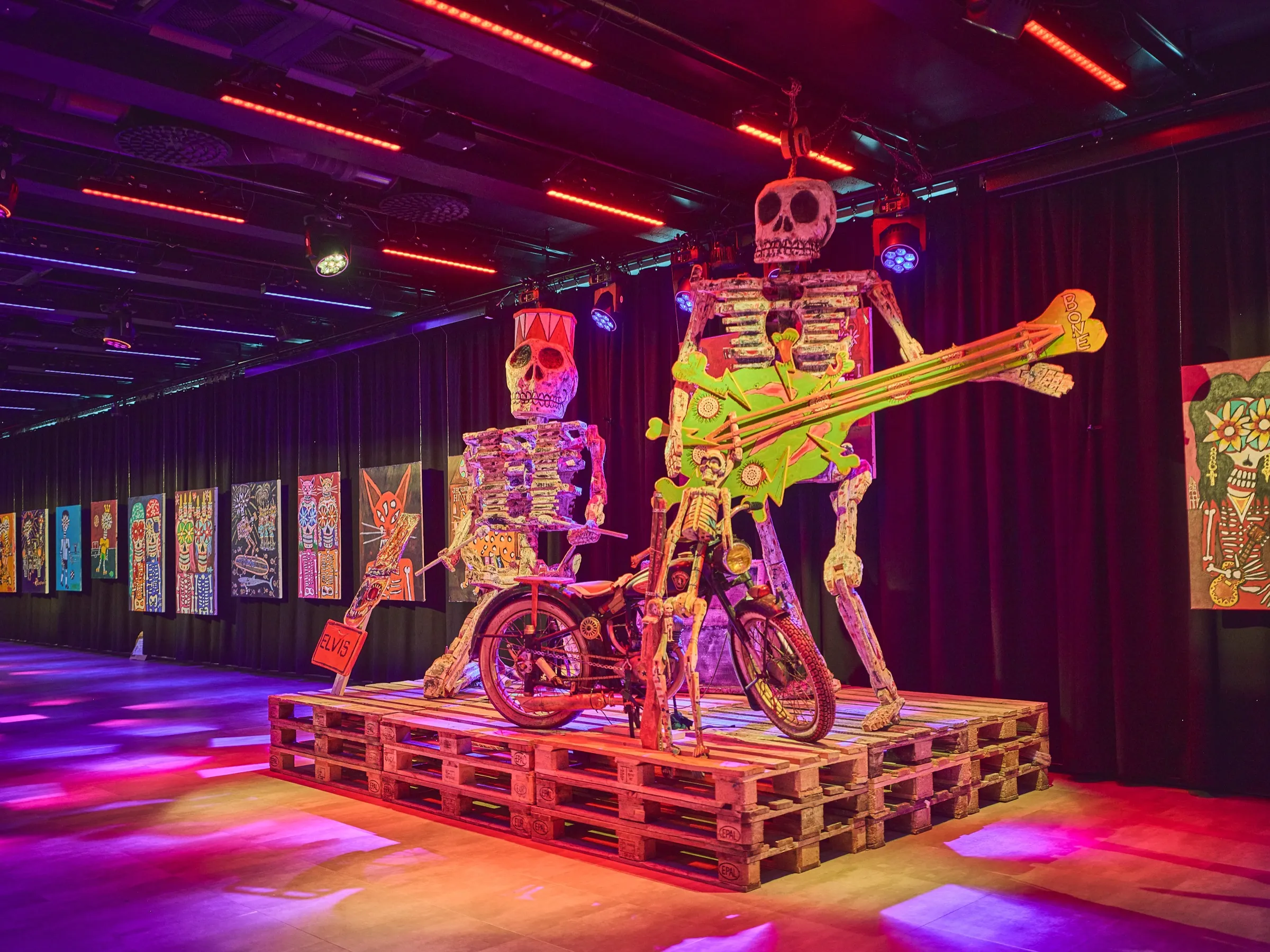
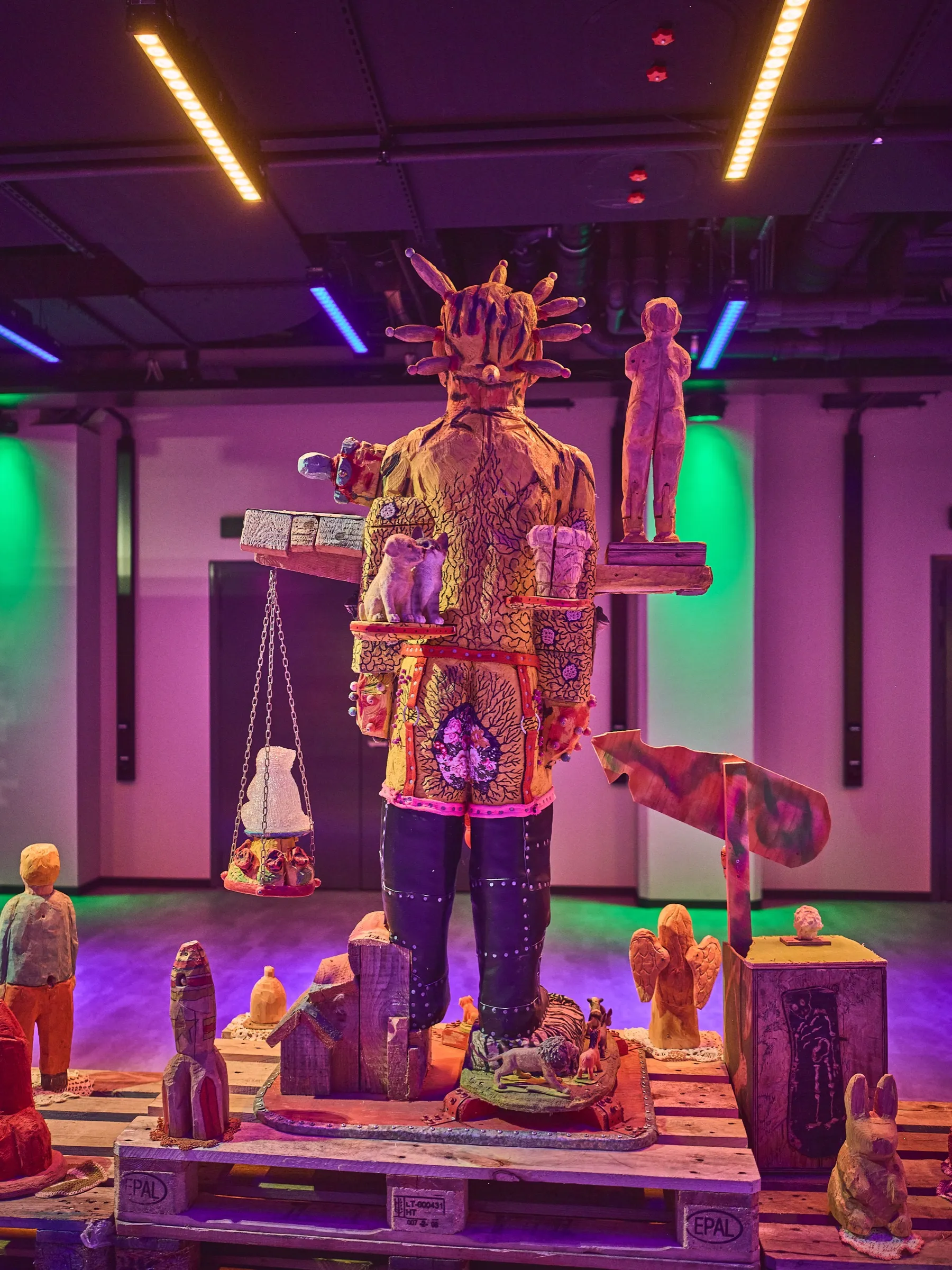
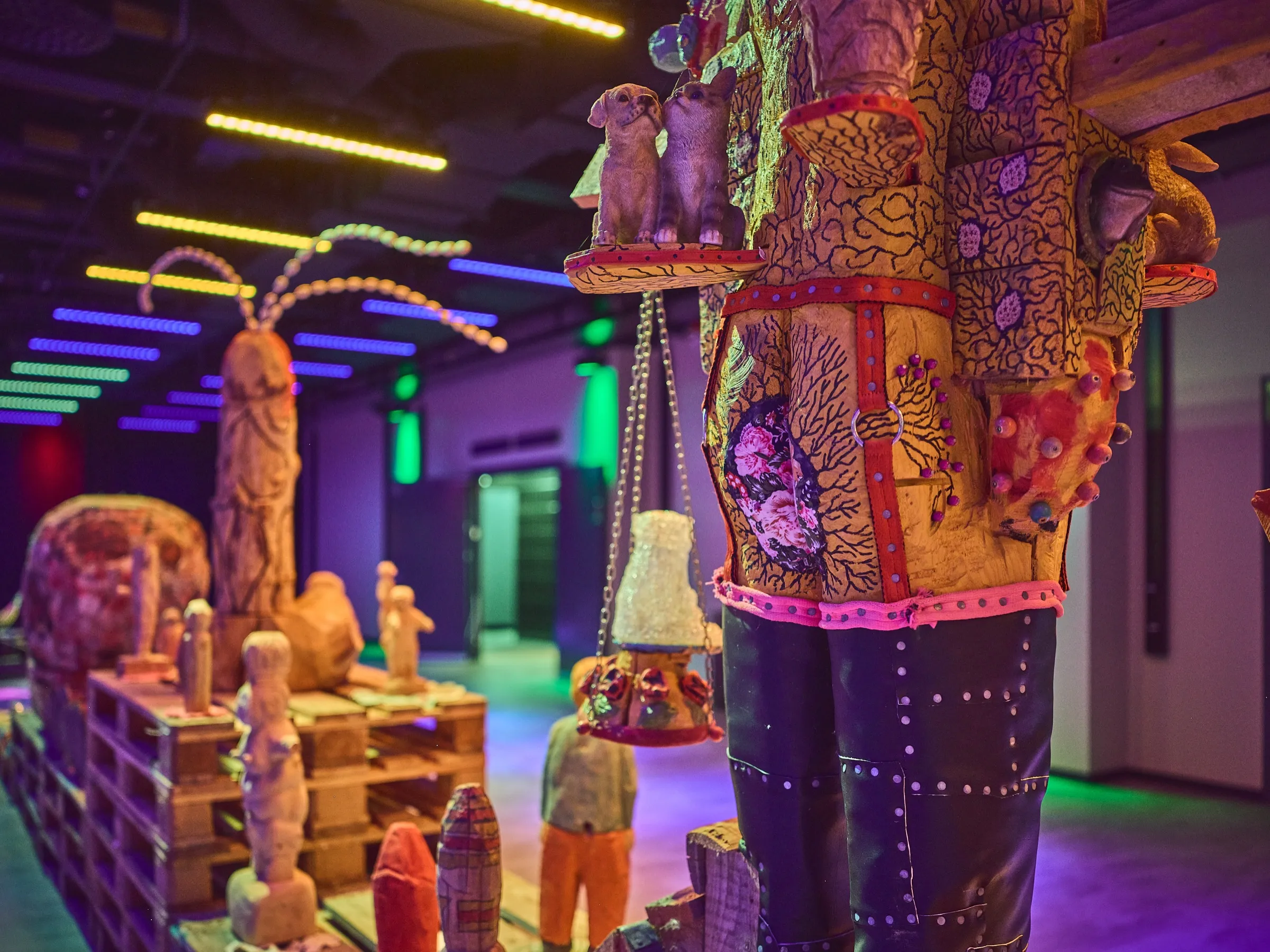
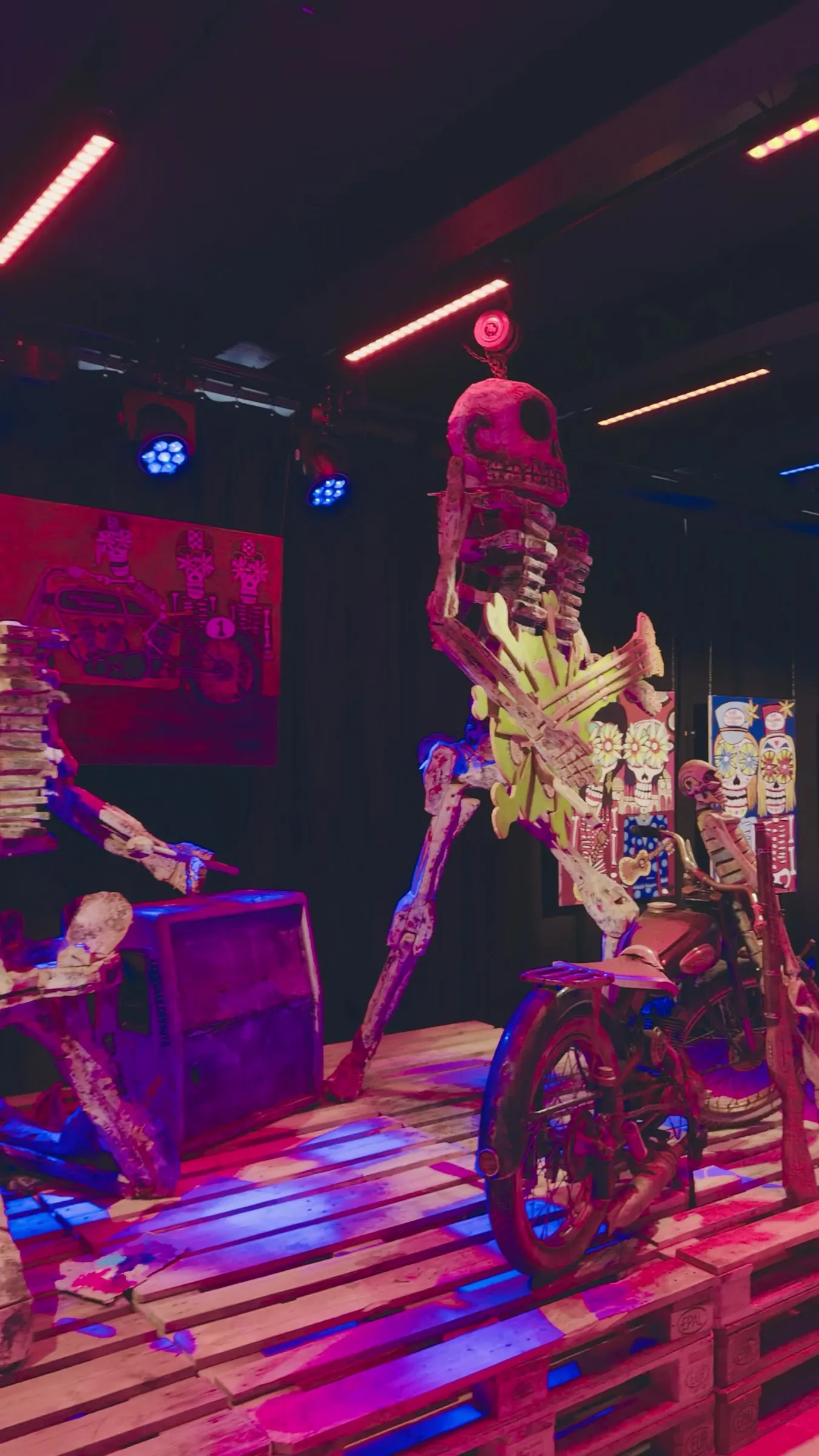
Anyone who thinks of horror when they see skulls has the Día de los Muertos wrong. The Mexican festival is not about fright, it is about remembering. For a few days families bring their dead back into life, with altars, candles, flowers, food and music. In 2008 UNESCO added it to its list of intangible cultural heritage.
Its perhaps best known figure, the elegant lady of the dead La Catrina, goes back to the illustrator José Guadalupe Posada, who created a satirical skull around 1910. There, the skull does not stand for fear but for remembrance, for transience and for the fact that in the end everyone is equal, rich or poor. Once you know that, you see the room in Hämeenlinna differently.
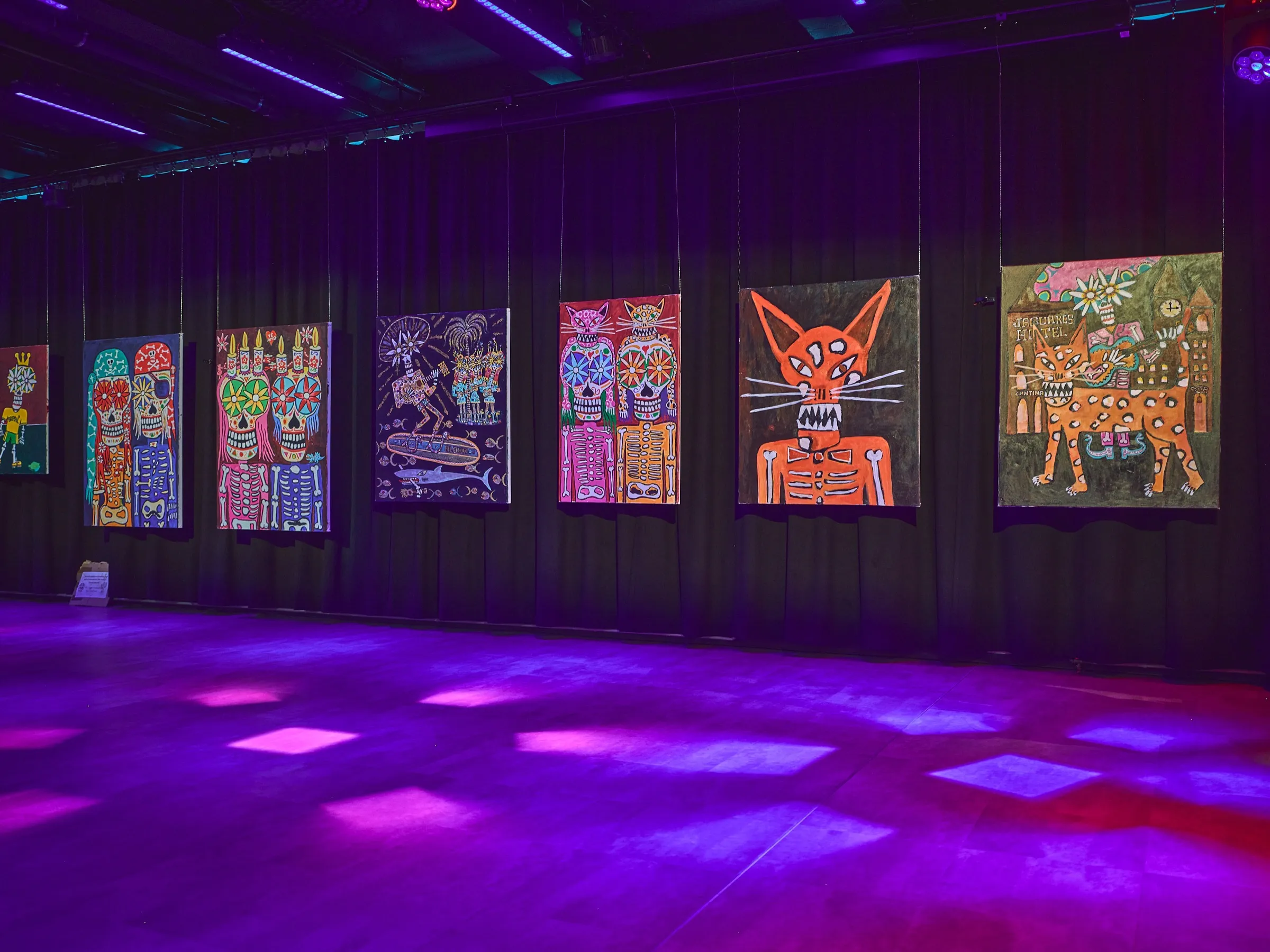
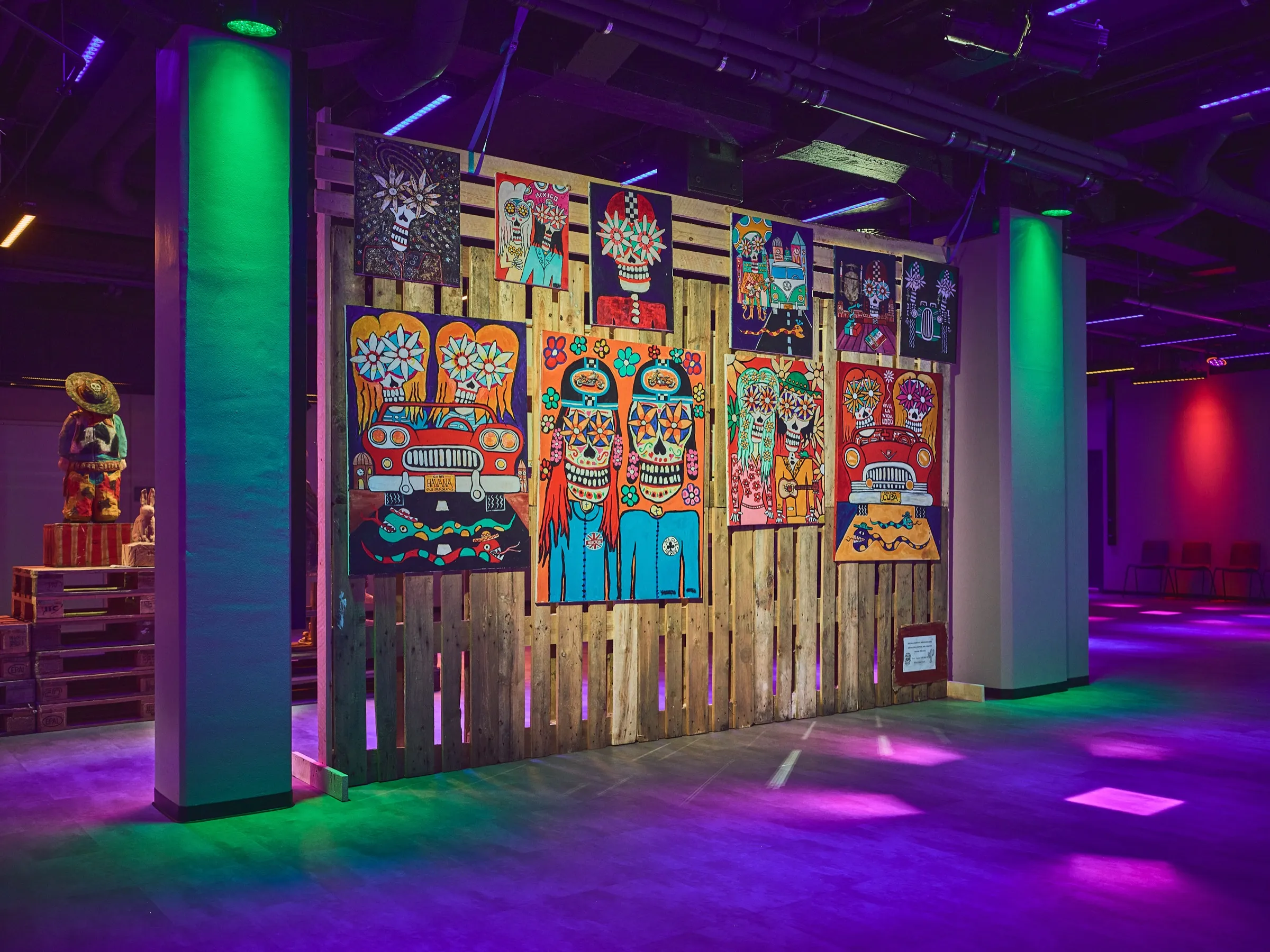
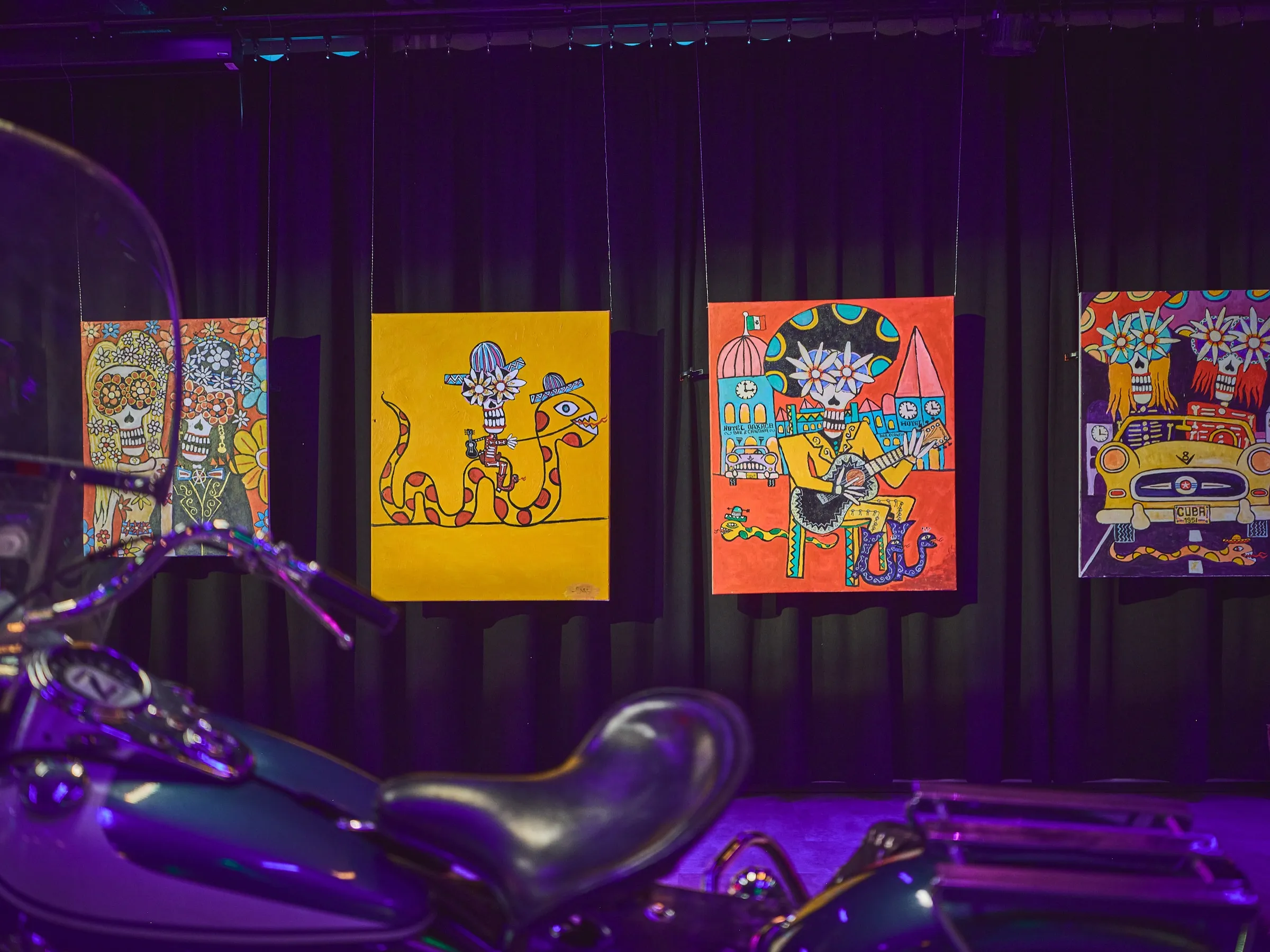
Then there are the Sexy Carvings, Kokko's oversized carved bodies. They are not beautiful in any easy sense, more absurd, vulnerable and funny all at once. I do not read them as provocation but as an honest reckoning with the body, with shame and with desire, one whose exaggeration takes away the heaviness.
That death and the body stand side by side here is old in art. Death reminds us of transience, the body of life, of birth and of strength. Whether that thought fully comes off here, or whether the naked figures and the festival of remembrance speak two different languages, I have not settled for myself. And I think I do not have to.
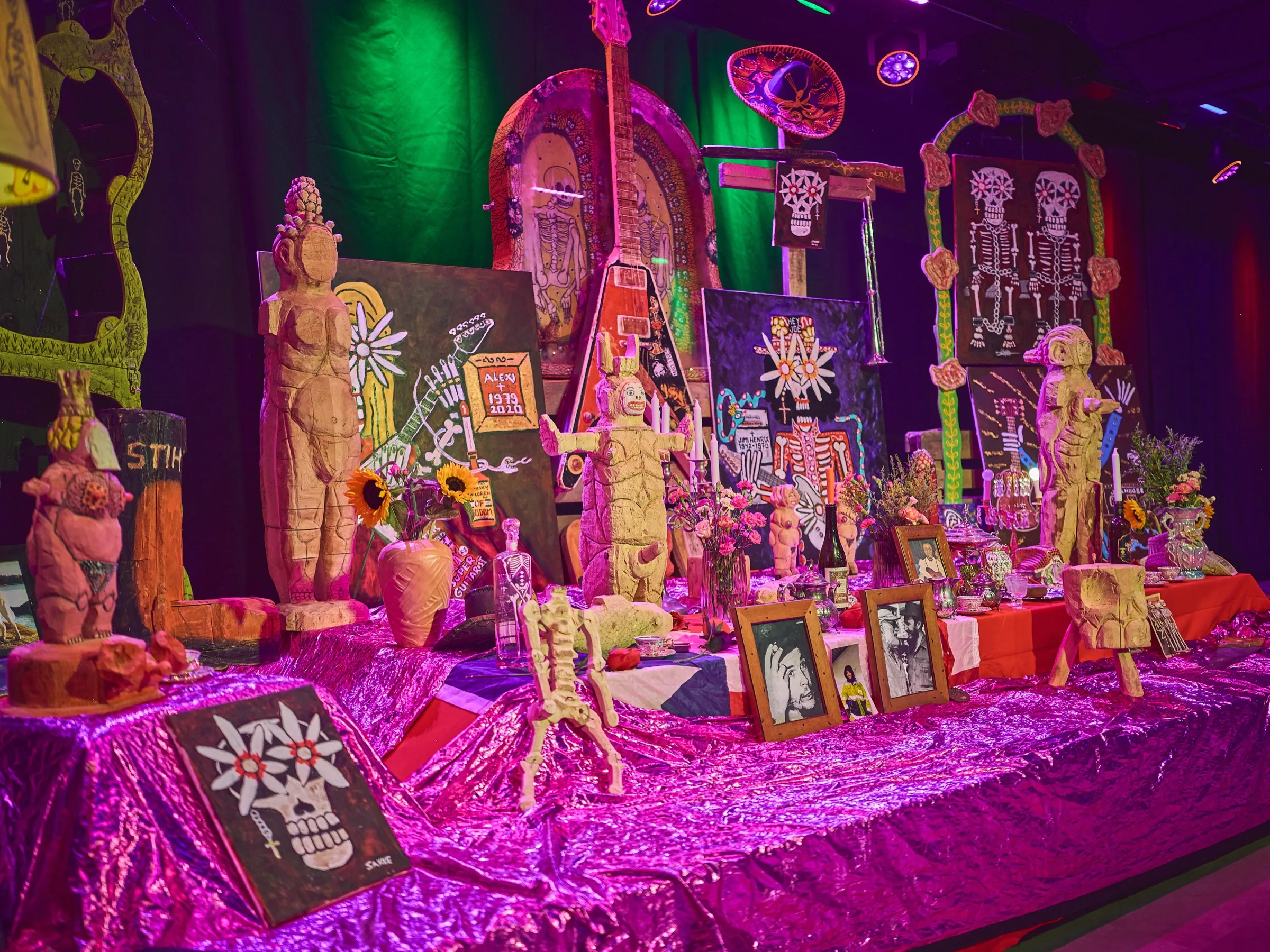
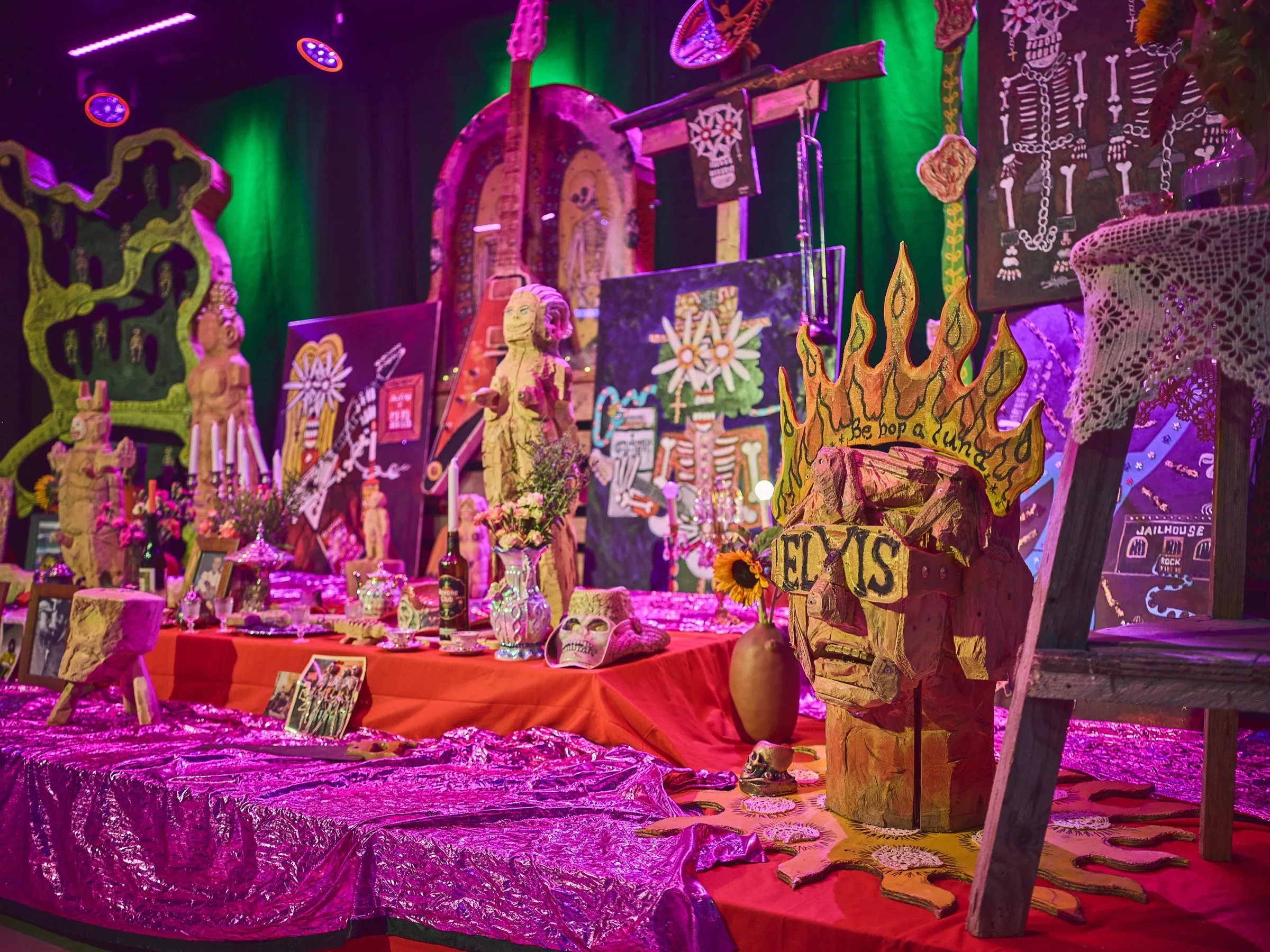
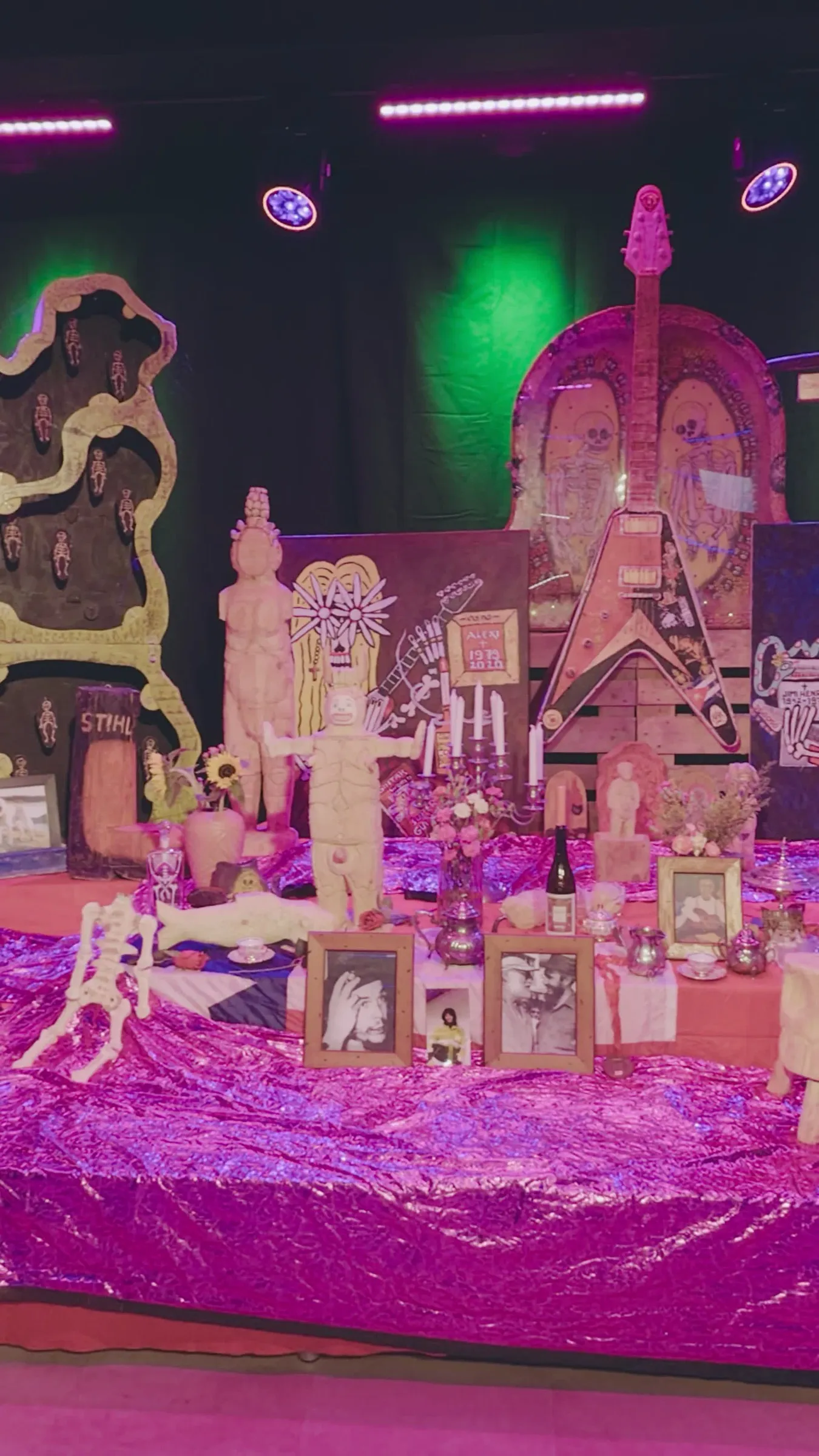
It is quietest at the altar. It is the only place in the room that does not come from the artists but from the visitors. You may even place a photo of your own dead here, and that was nowhere signposted either, I only learned it afterwards. Whoever wants to leaves something and stays a moment. Here the festival of the dead is suddenly no longer a motif but real.
I think it is a really great exhibition. What is missing is the context on site, and without it you can misread the show, the way I did at first. It is simply not a Mexican exhibition, but two Finns' personal approach to a foreign festival. Once you know that, it becomes even more interesting, especially how the Finnish sculptor sees his figures and how the whole thing is built up. A small note on the wall would help a lot.
A room that makes you fall quiet.“Note from the Verki, day 4