How 347 Works Became 55 Banners
On July 7, 2026, the city of Celle agreed that we could use the scaffolding at the Rathsmühle. The scaffold was to go up in August, which made the deadline for our call short, even after we had extended it to August 9. A call for entries is quickly written. What comes after is an inbox. Submissions arrived by email, the images as attachments, the titles sometimes in an attached table, sometimes somewhere in the body of the email.
In the end there were 130 applications with 347 works, for 55 places. A jury of five people was to decide, and I was one of them. For that to be fair, everyone has to be able to see all the works equally well, rate them alone first, and not know how the others voted. With a pile of printouts on a table that is difficult, with 347 attachments in an inbox it is impossible.
So I built a portal of its own for the jury, in conversation with AI and my digital team: I describe what the jury needs, the AI turns that into something I can look at, try out and check, and only when it is right does it go out. On July 31 the portal went online. Every application appears there as a sheet with up to three works and their details; you choose with one click, can mark a favourite and make notes. Only people who are logged in can see the images, passwords are stored in protected form, and the portal does not store email addresses.
Two details show how a portal like this works in the everyday life of a jury. Anyone on the jury was allowed to apply too, but not to decide on their own work. That was not just agreed, it was locked in the portal: your own sheets simply could not be rated. And because submissions kept arriving until the end, the folder grew, from 80 entries on August 1 to 130 by the session. So nobody had to search for what had been added, there was a routing slip called “What's new”.
The jury met on August 12 at 4 p.m. at Trift 32. Just under an hour earlier, at 3:19 p.m., we froze the state of the preliminary vote. For the session, which I chaired, there was a view of its own that only I could operate and that we projected onto the wall for everyone: you leaf through the works, mark one as set, as reserve or as declined, and a counter keeps track of how many of the 55 places are still free. A filter narrowed the folder down to 78 candidates. That sounds technical, but above all it helped five people talk about the same picture and not about which page it was on.
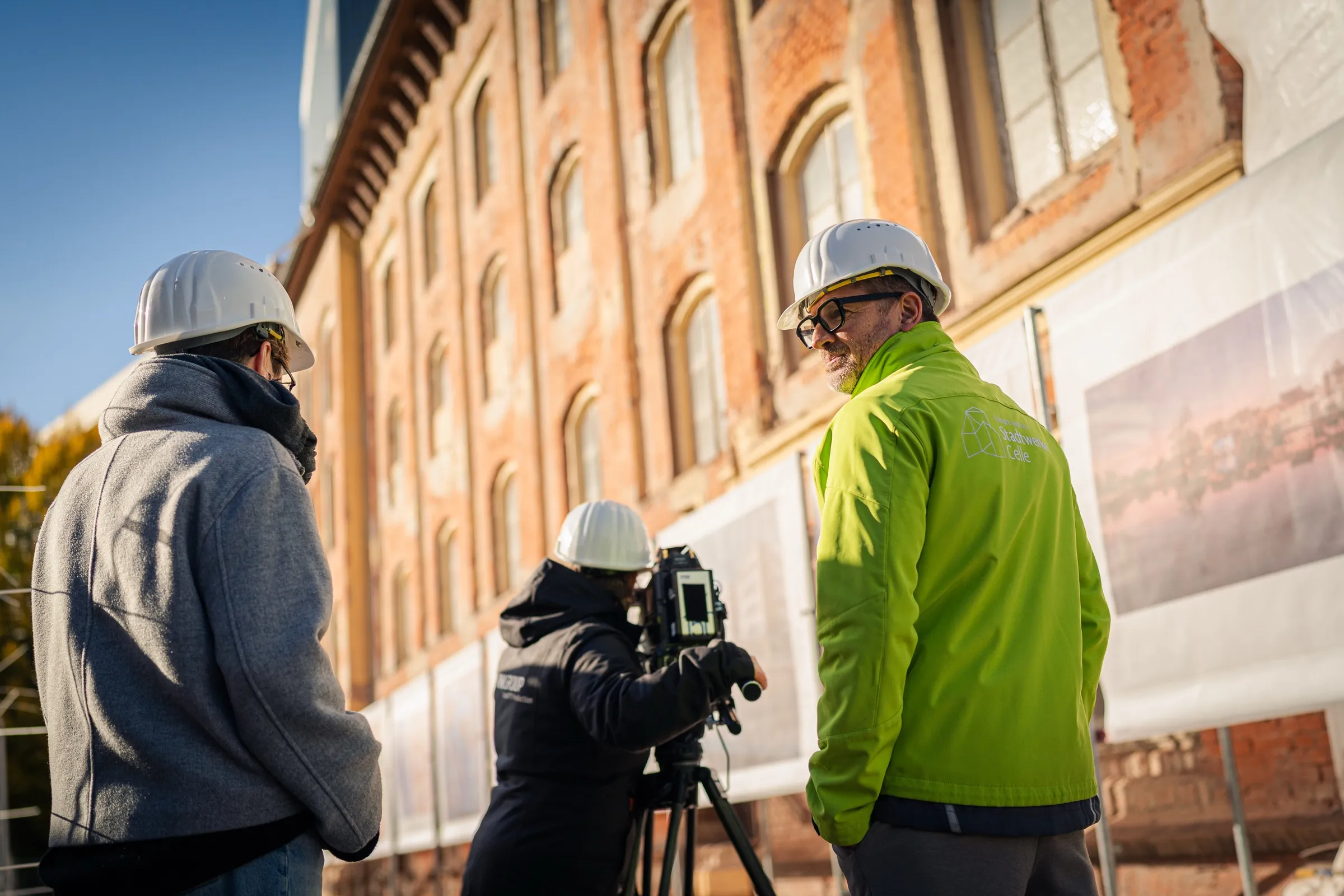
For the TV shoot I noted it down like this: it was possible with tools I built with AI especially for this project. But it was not a computer that chose, it was a jury of five people. The AI took the legwork off our hands. That included matching titles from the submission emails to the right images, and a small watcher on my computer that let me know when someone from the jury had logged in for the first time. How long anyone spent in the portal it deliberately did not measure.
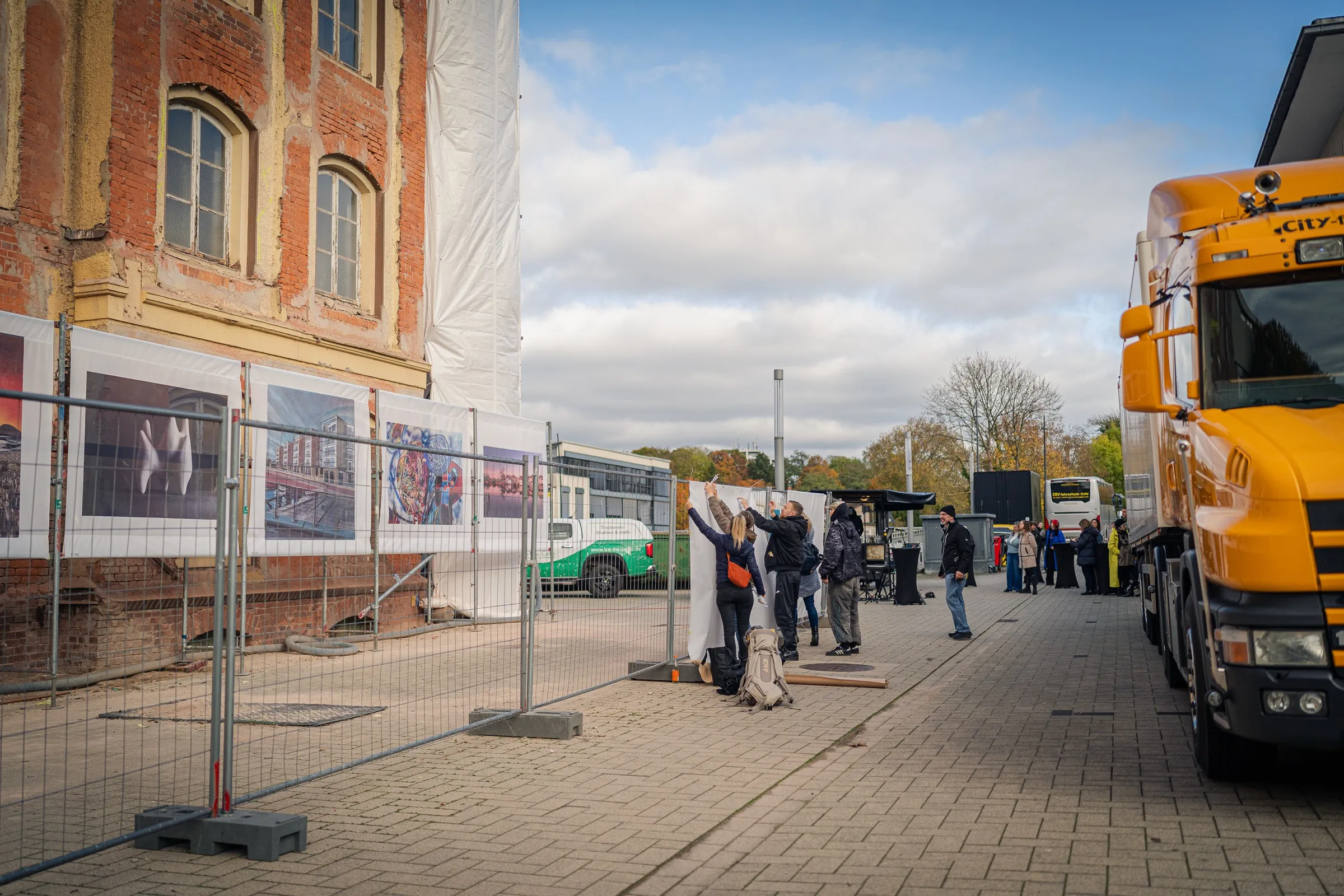
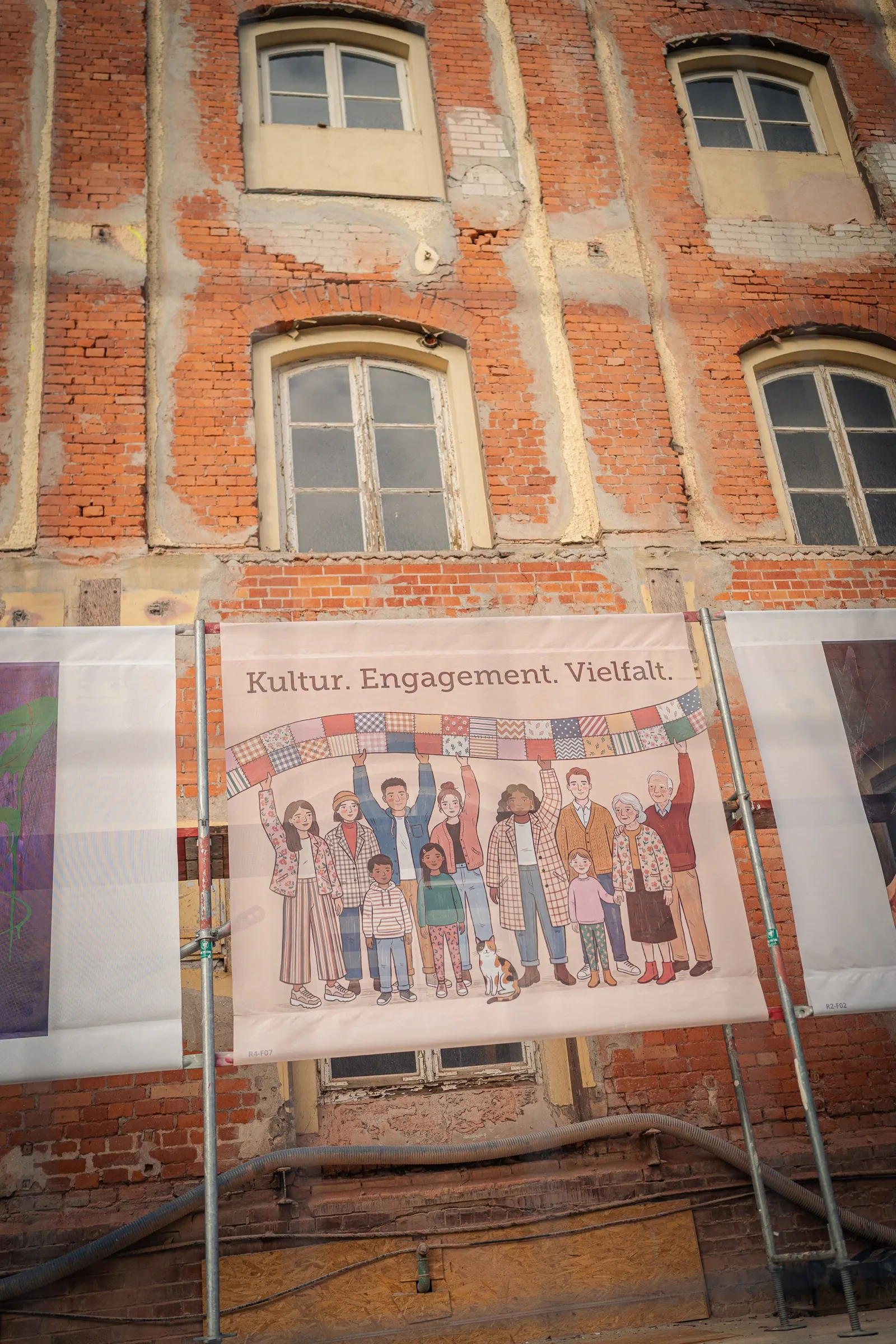
After the selection came the final artwork, and it begins with a scaffold you only have as a plan. According to the plan it is 32 metres wide and 13 metres high, in five rows, with bays 2.50 metres wide. That is what we distributed the banners on. When the scaffold went up in October, we measured it from my photos, and the bays were more like 2.57 metres wide, estimated to within a few centimetres. The banners still fitted, but we had to replan the hanging.
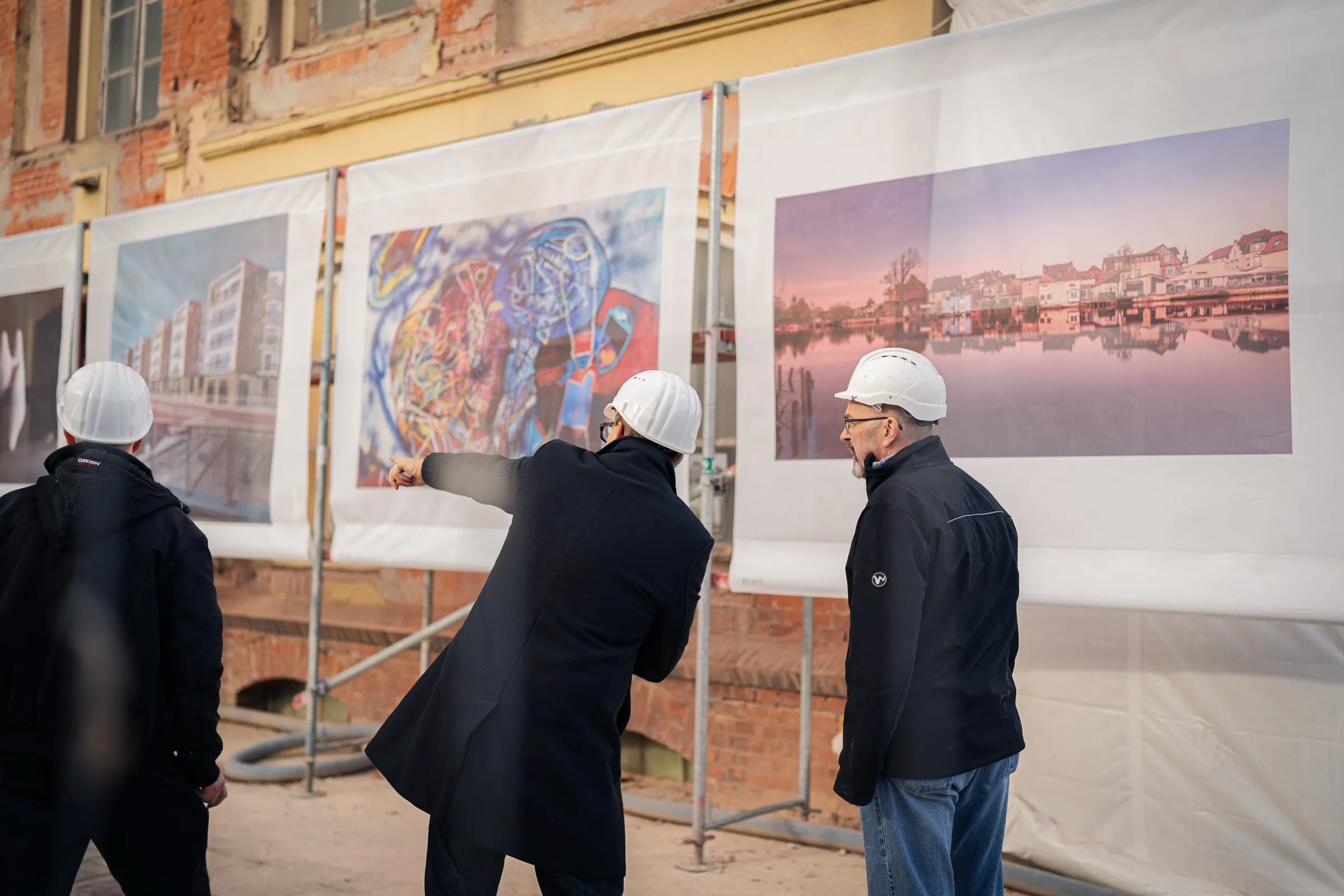
Each banner measures 2.30 by 2.06 metres, printed on mesh, a fabric with small holes, with a hem pocket. The originals came in very different quality. Measured at final print size they ranged from 81 to 227 pixels per inch. We upscaled eleven of them with AI, and each one was compared at full size with the original, so that no texture would appear that the artist had never painted. The printer had told us that 70 to 100 are enough for a façade banner.
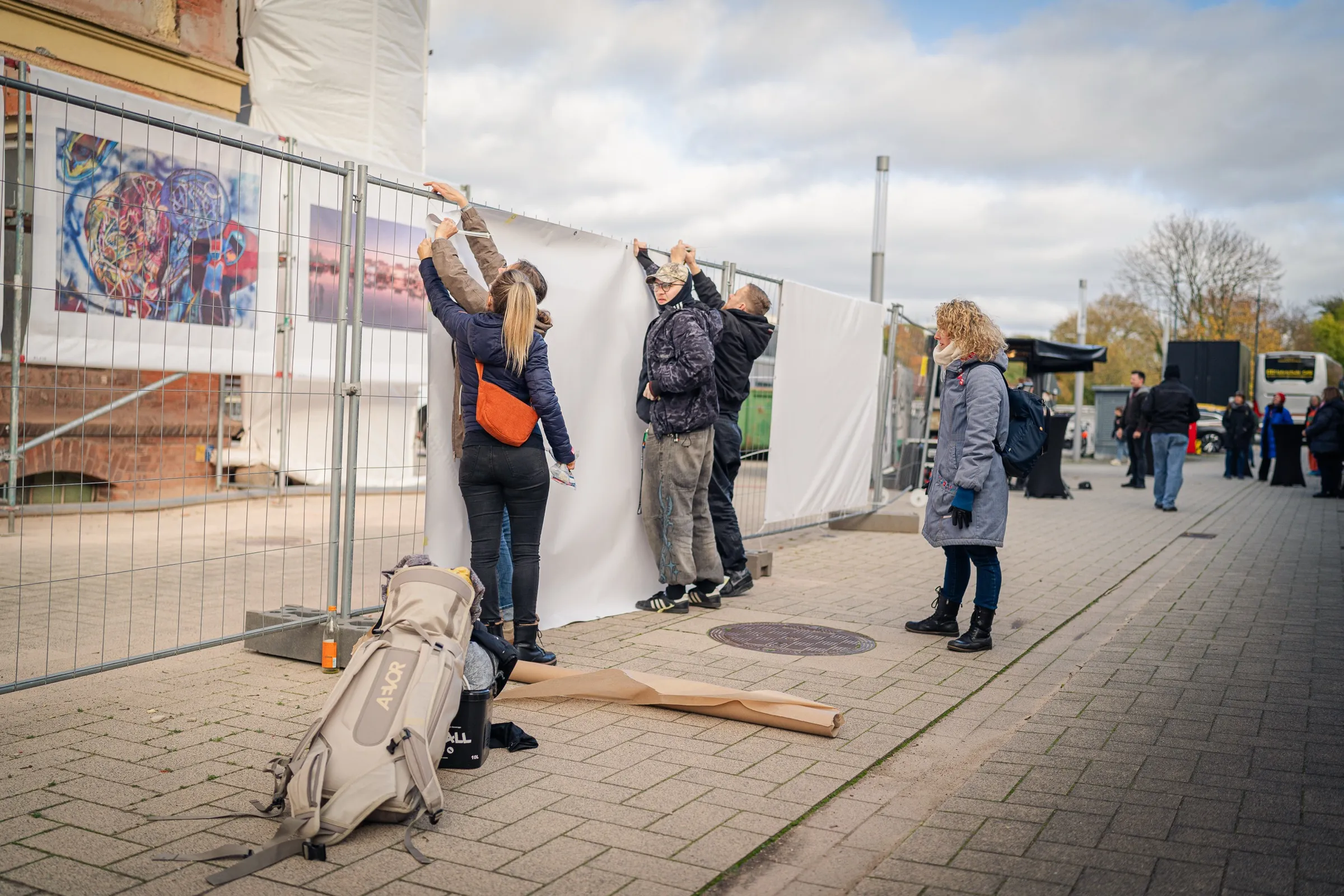
Every banner got a position code like R2-F10, row two, bay ten, so that nobody has to guess while hanging. The print files went out on September 14 as five zip files, 7.07 gigabytes in all, and Trispel in Celle did the printing. The rest was done by hands, up on the scaffold, with climbing gear. The position code is there for the hanging, not for the audience.