A forest planted for love
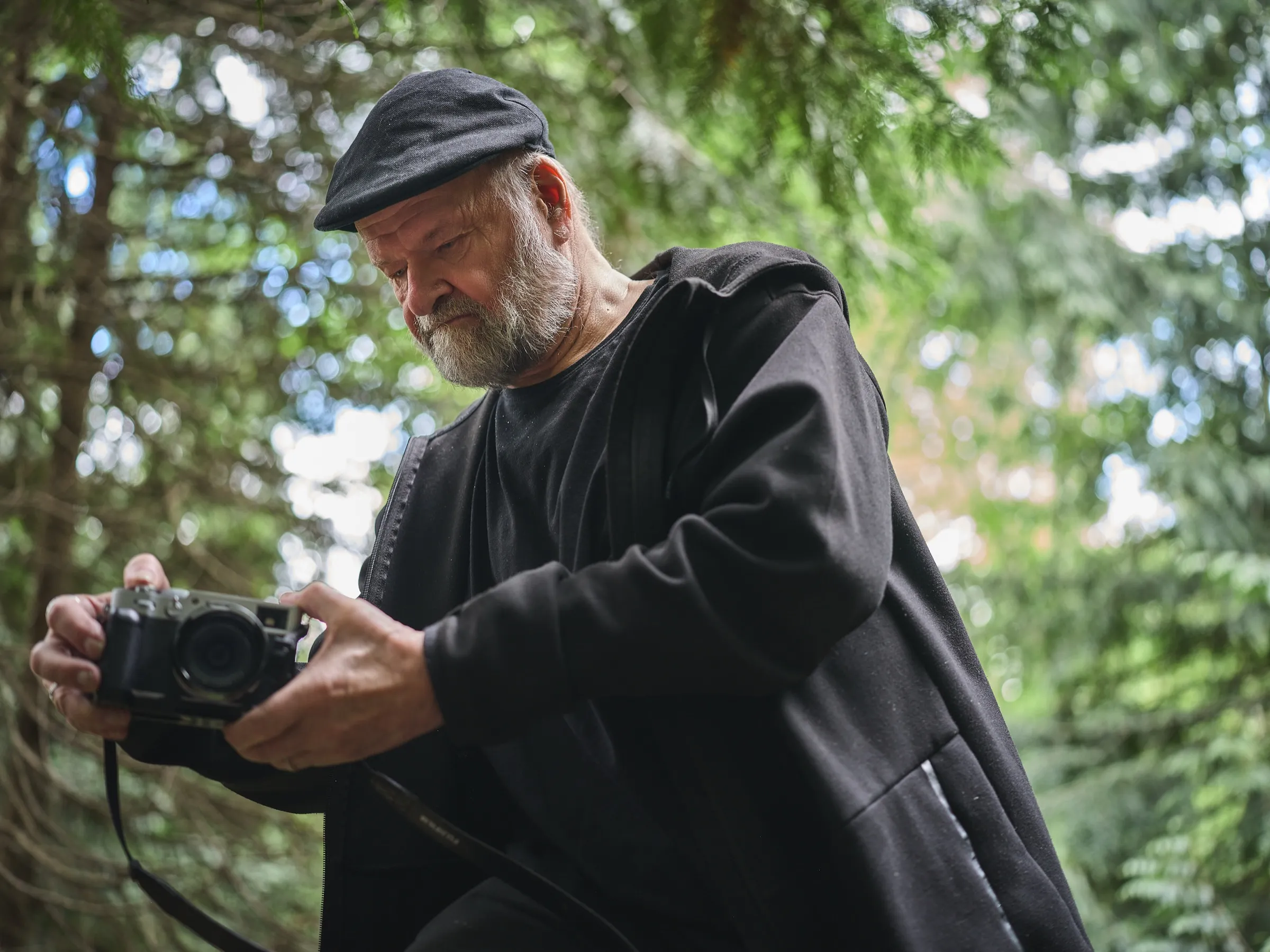
This story first needs a man in a black hat. Terho Aalto, born in 1953, learned his craft at the art academy in Helsinki and spent more than three decades as press photographer for the local paper Hämeen Sanomat, from 1984 to 2017. Since then he has worked freelance and made sixteen solo exhibitions, in Finland, Norway and Berlin. His Berlin exhibition of 2018 was called, of all things, Encounters. You can spot him from a distance, by the black hat he has worn for years.
The paper he photographed for over so many years once called him hooked on people, and he himself describes the way he works like this: no staged setting, observing and catching moments in flight. Our first tour together took us to the edge of town, into a forest unlike any other: the Tuijametsä.
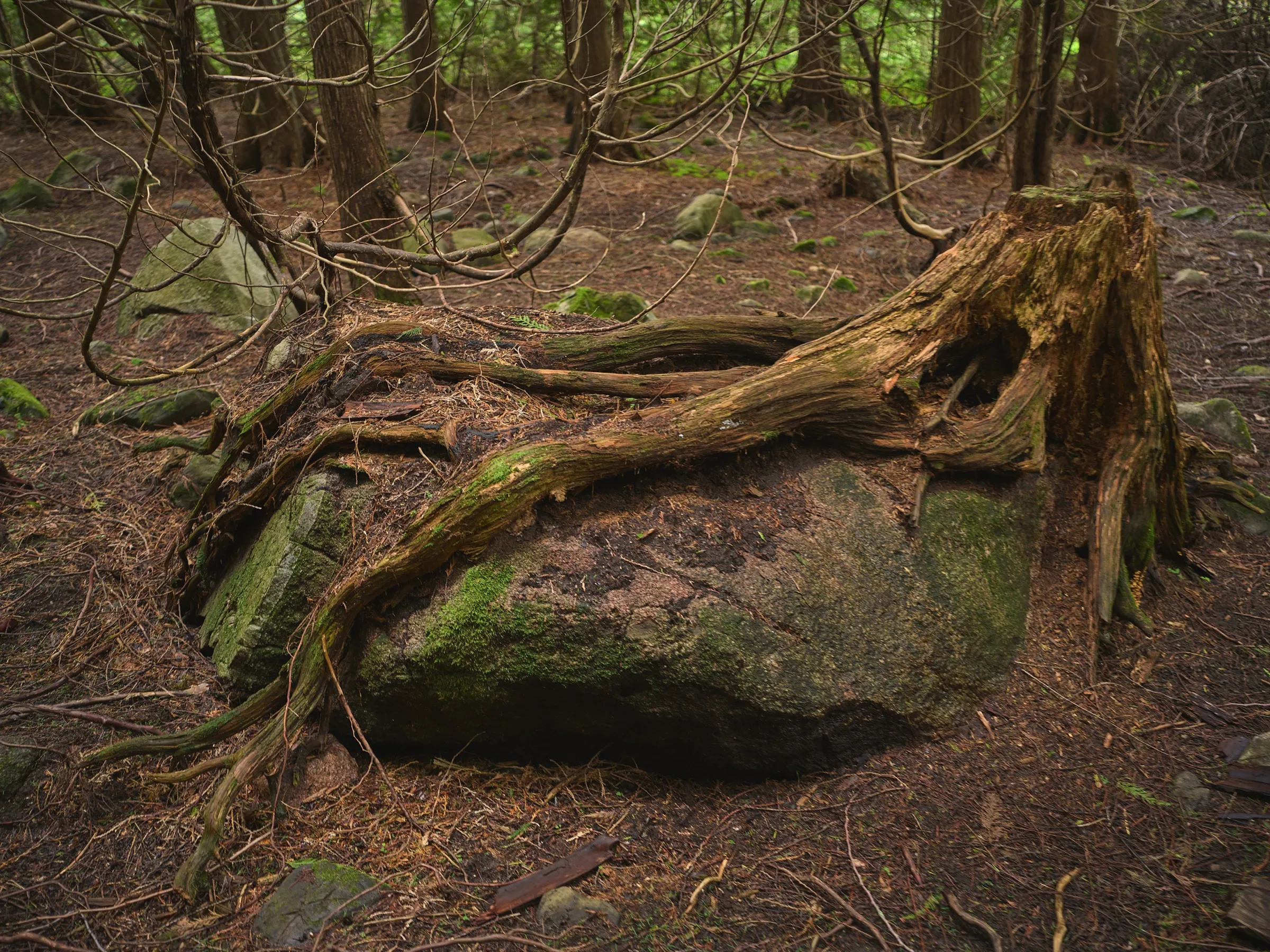
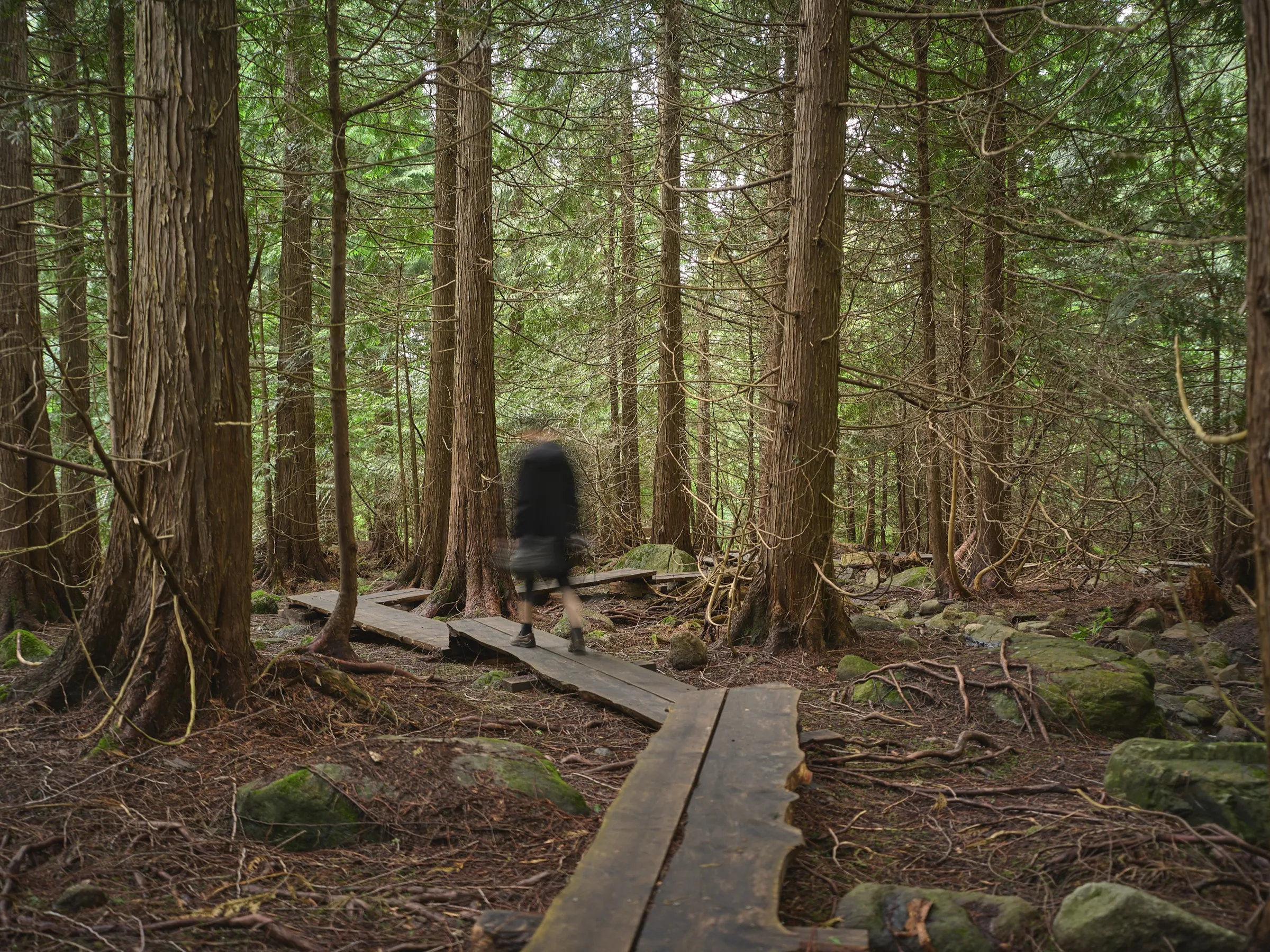
A narrow plank path winds between the trunks, the ground is a weave of roots, stones and needles, and the light falls green-filtered all the way down. Terho walked ahead, I followed, and both of us kept stopping. Two photographers in a forest, that takes time.
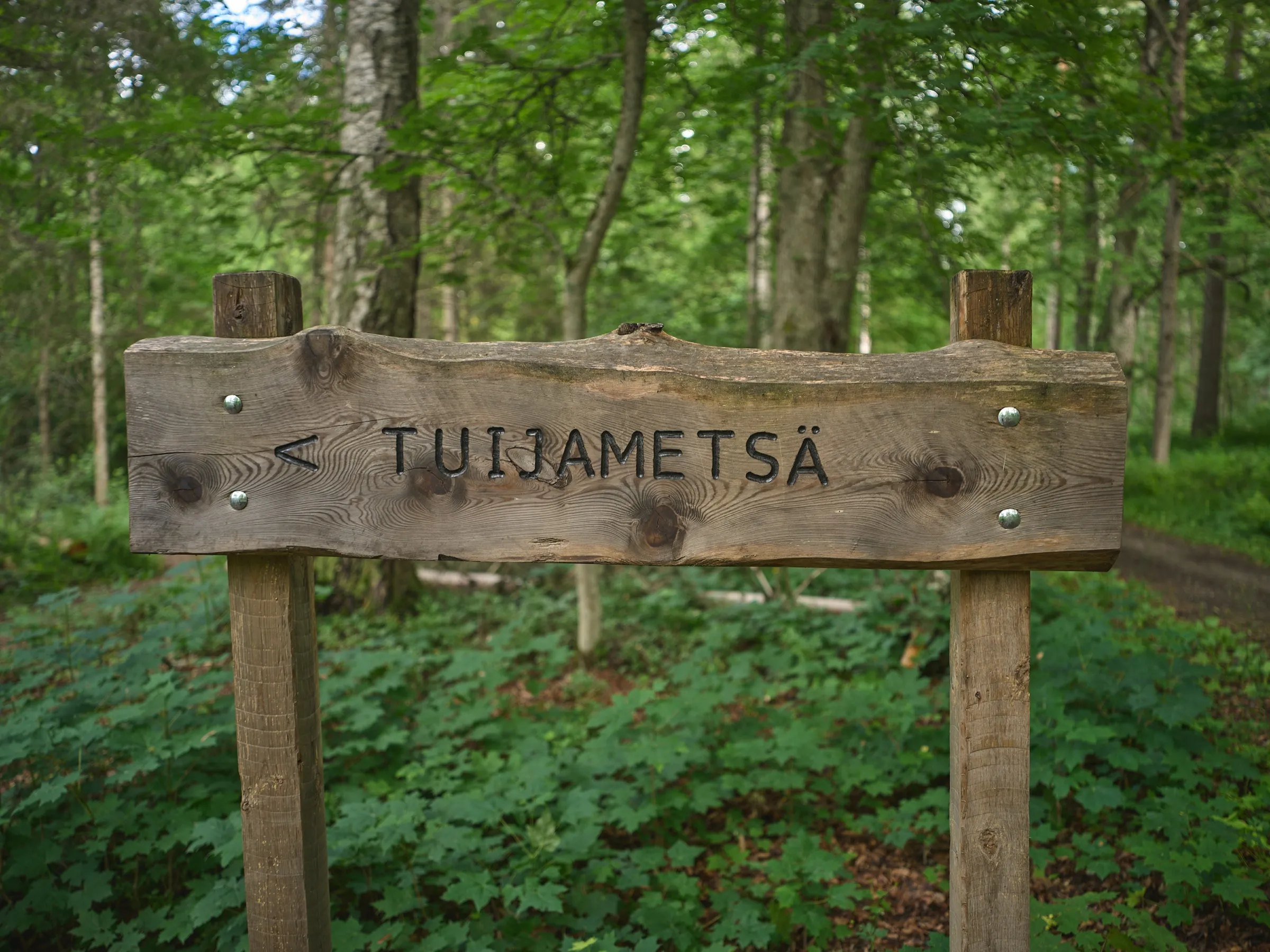
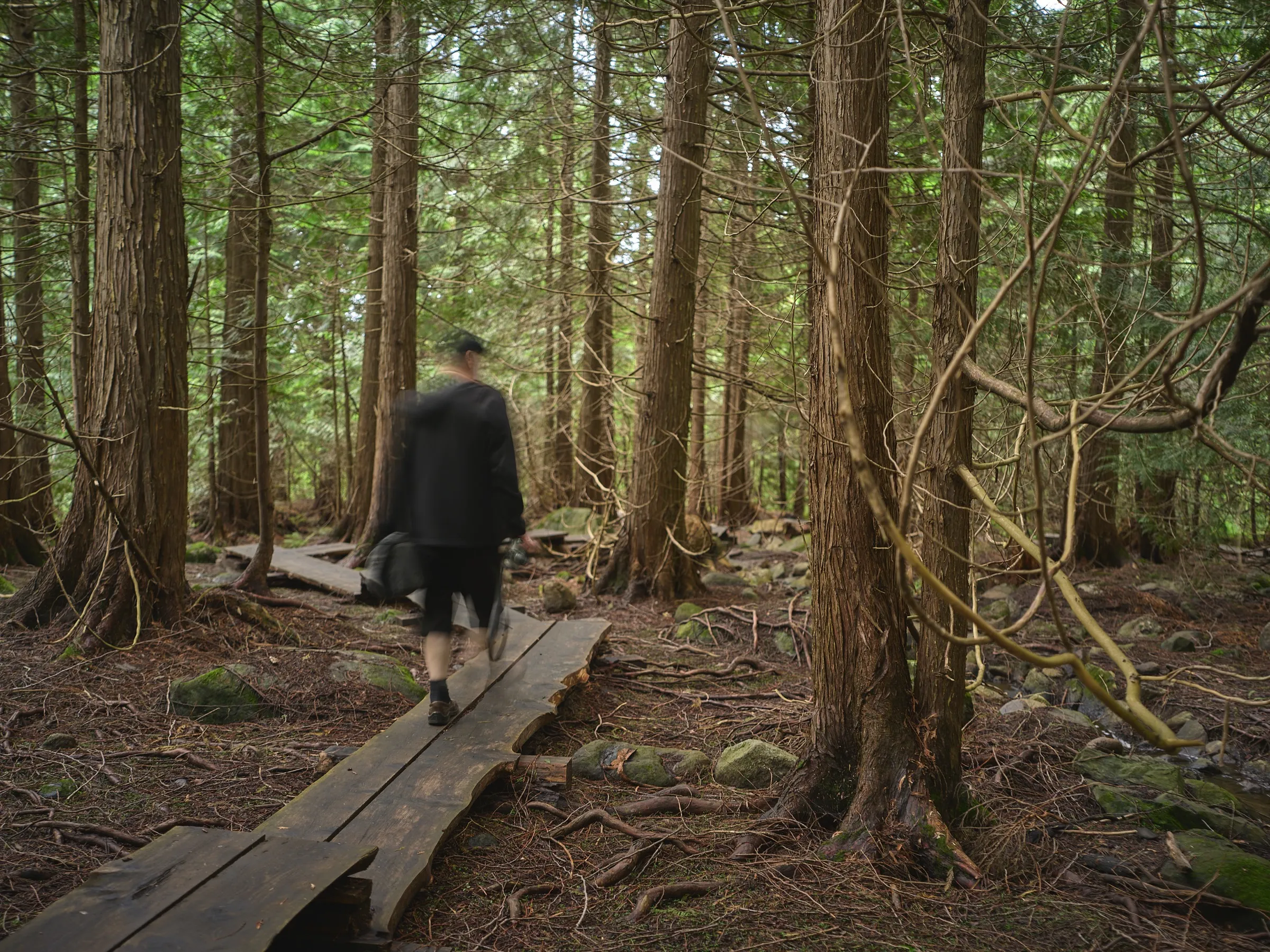
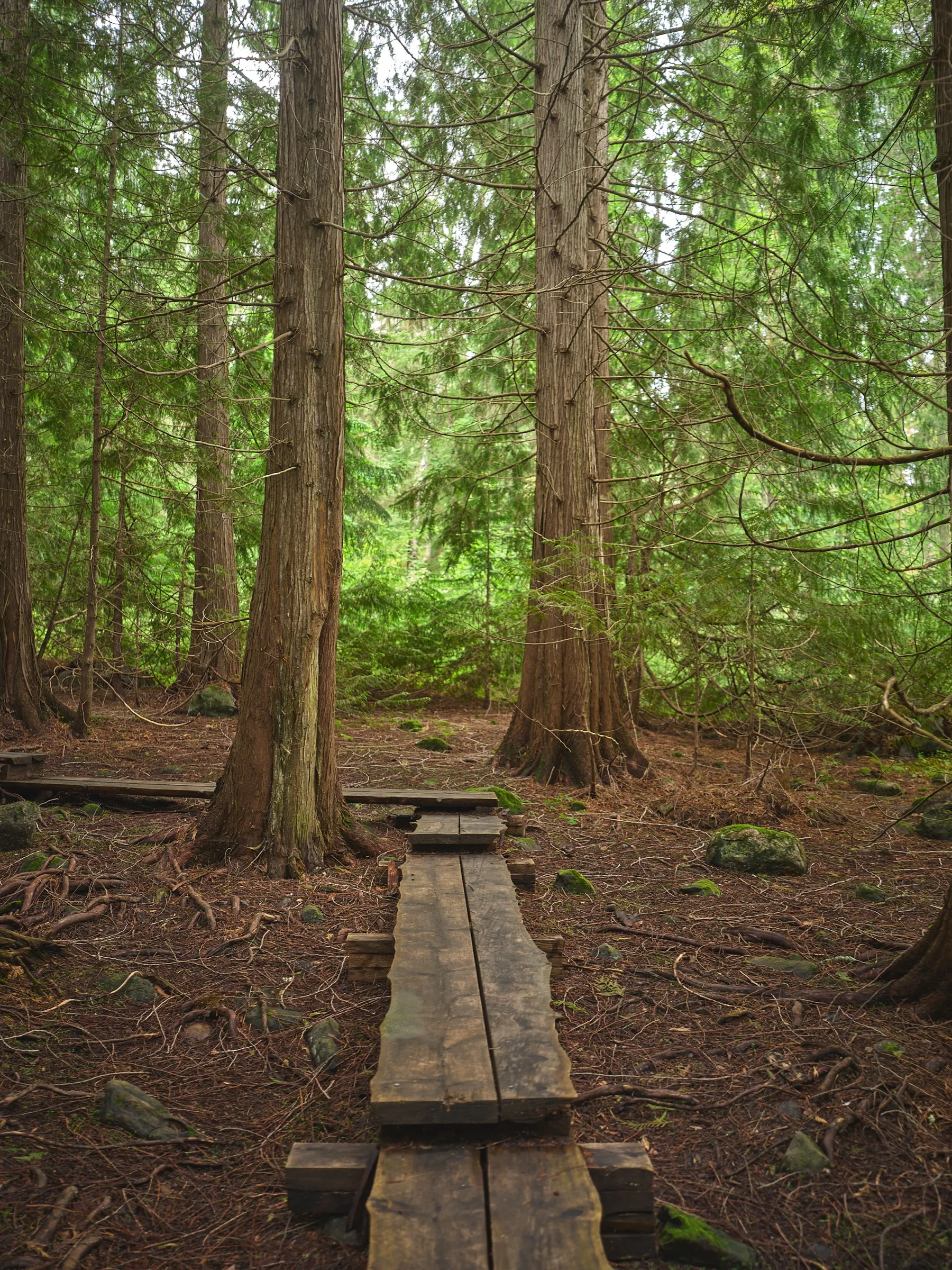
For the Tuijametsä is not a forest that grew here on its own, but a planted one: Canadian thujas and giant thujas on barely half a hectare, in the middle of the Aulanko landscape park. A stream from the Metsälampi runs through it, and even on bright days the forest keeps its visitors in shadow. Most people strolling through the park walk right past it without noticing.
That there is a park here at all begins with Otto Carl Rehbinder, governor of the province of Häme. In the 1850s he had a carriage road built from the edge of town out to Aulangonniemi and began clearing the headland for a park. But the work was left unfinished, and the hill waited for the man who would turn this beginning into something great.
That man was Hugo Standertskjöld, born in 1844 on an estate in Janakkala, made rich as an arms manufacturer in Russia. In 1883 he bought the Karlberg estate at the foot of the hill as a summer residence and began to build, for more than twenty years, at times with 250 workers. Roads and avenues, two artificial lakes with swans, pavilions, a temple of happiness, a romantic granite castle ruin, an observation tower, and in between hundreds of species of exotic trees and flowers. A Finnish hill became a park forest without equal in Finland.
Why would anyone do such a thing? The story they tell here goes like this: as a young officer in Poland, Standertskjöld fell in love with a Polish countess. Decades later he built her this park, so that she would come to him in Finland. She never came, not a single step across the Baltic. Standertskjöld remained unmarried all his life, and he opened the park to everyone. Since 1930 the park forest has been a nature reserve. Whoever walks the plank path through the thujas today walks through the monument of a love that never arrived.
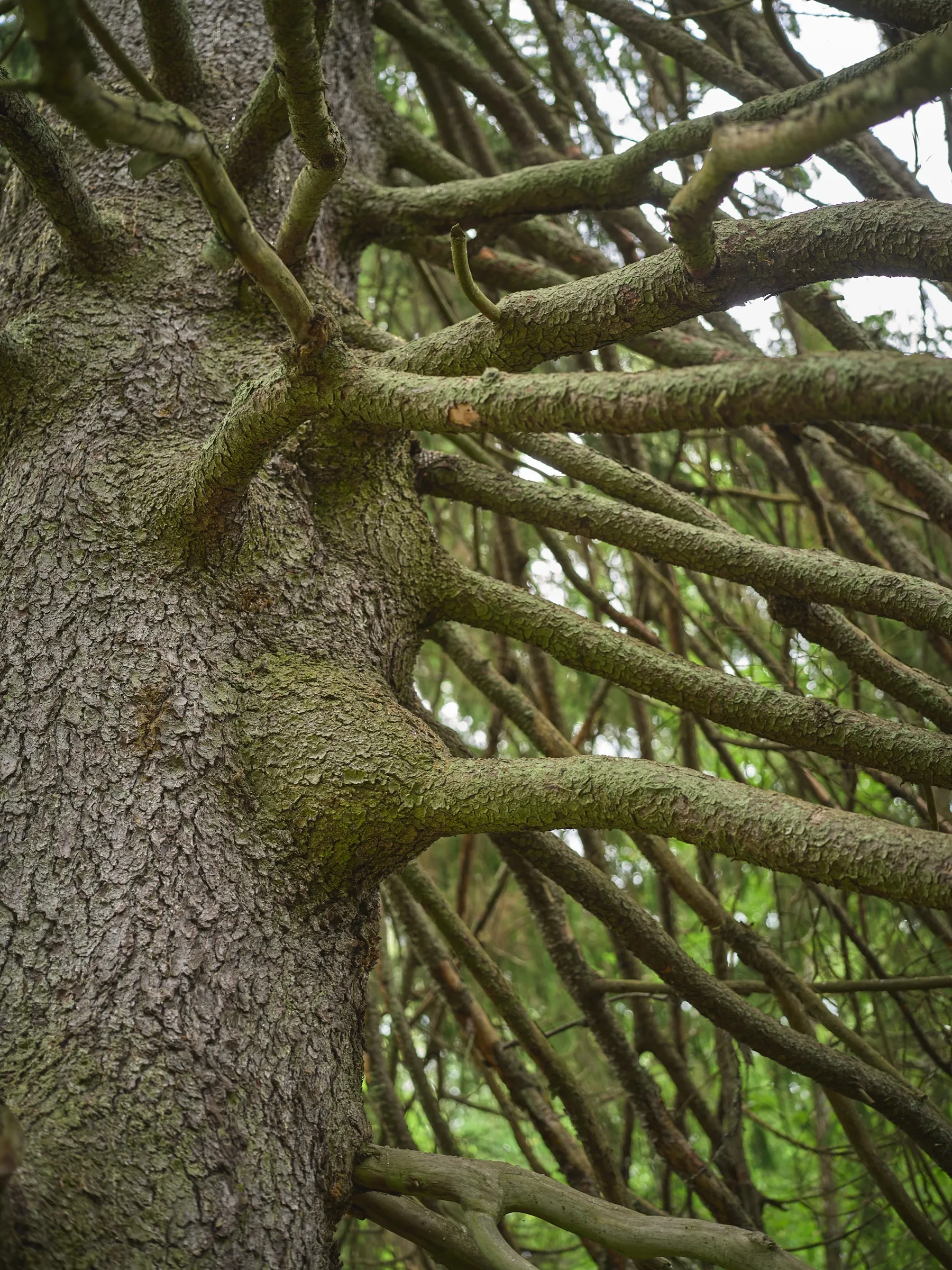
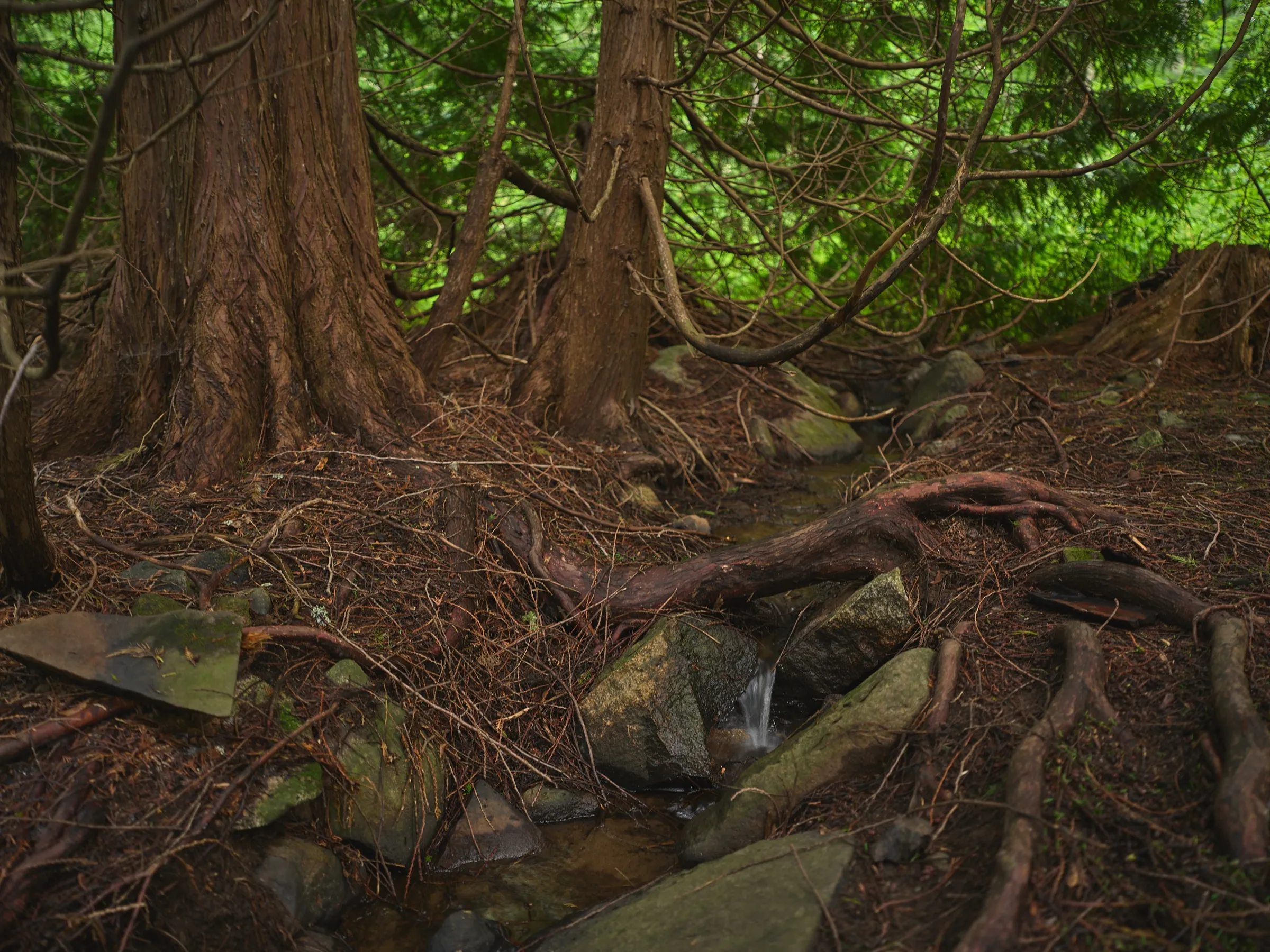
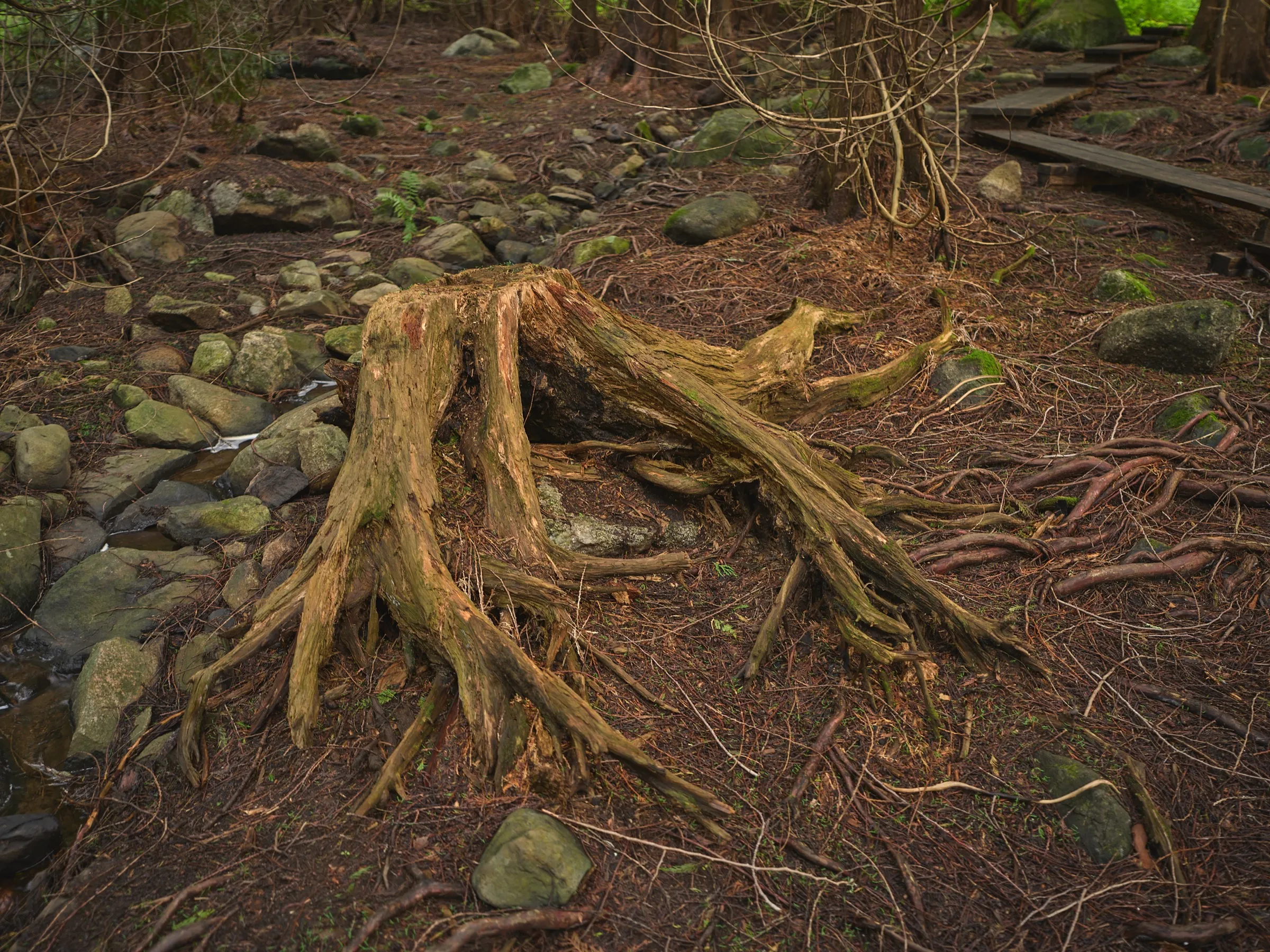
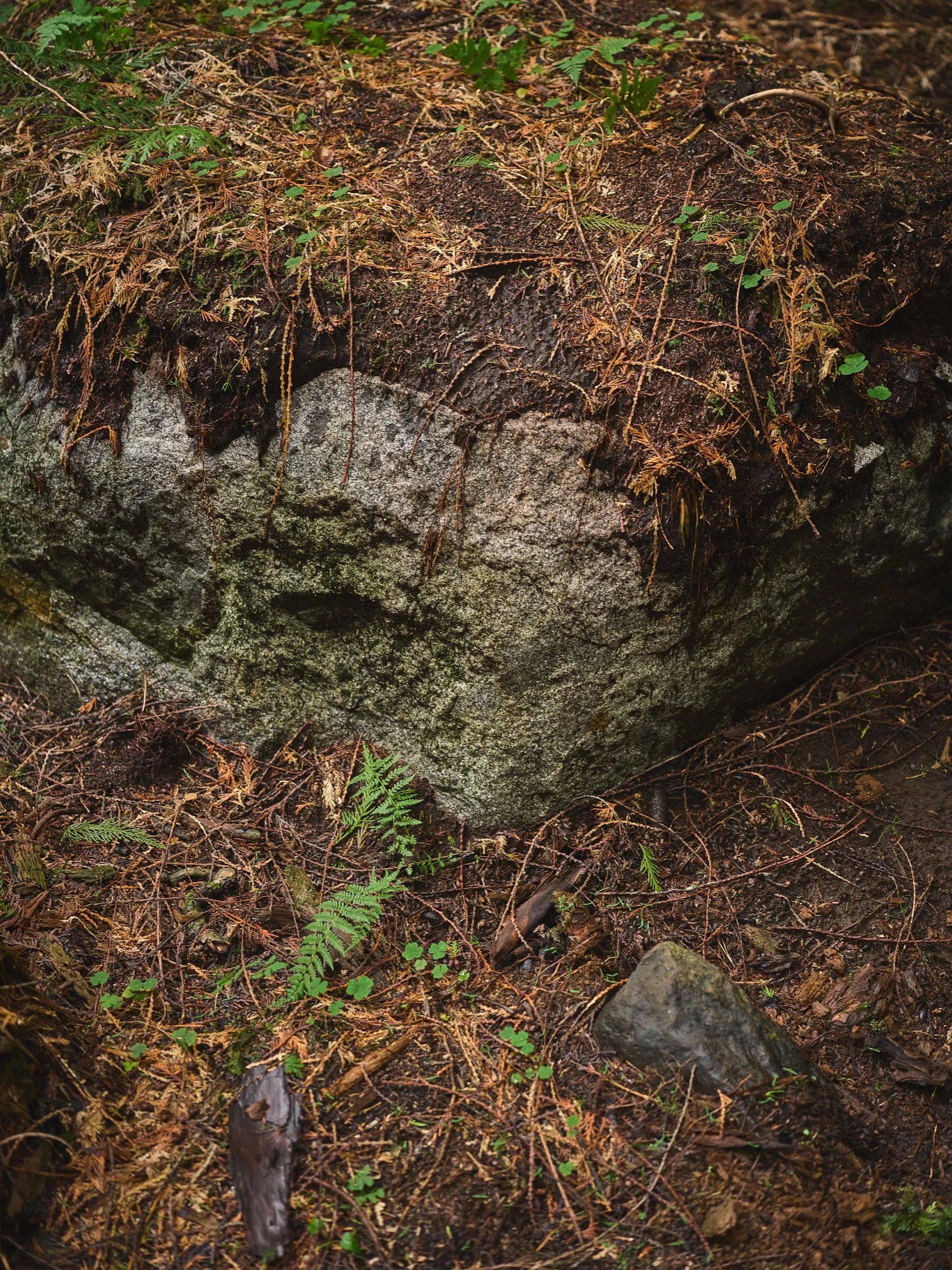
A whole park for a woman who never saw it.“Note from the Tuijametsä
A few days later Terho was at the door again, this time with a full day ahead of us. That is what the next story tells.